Plant-base Leather: A Complete Guide to What It Is, Types, Manufacturing, Uses & Benefits
Table of Contents
What Is plant-base Leather ?
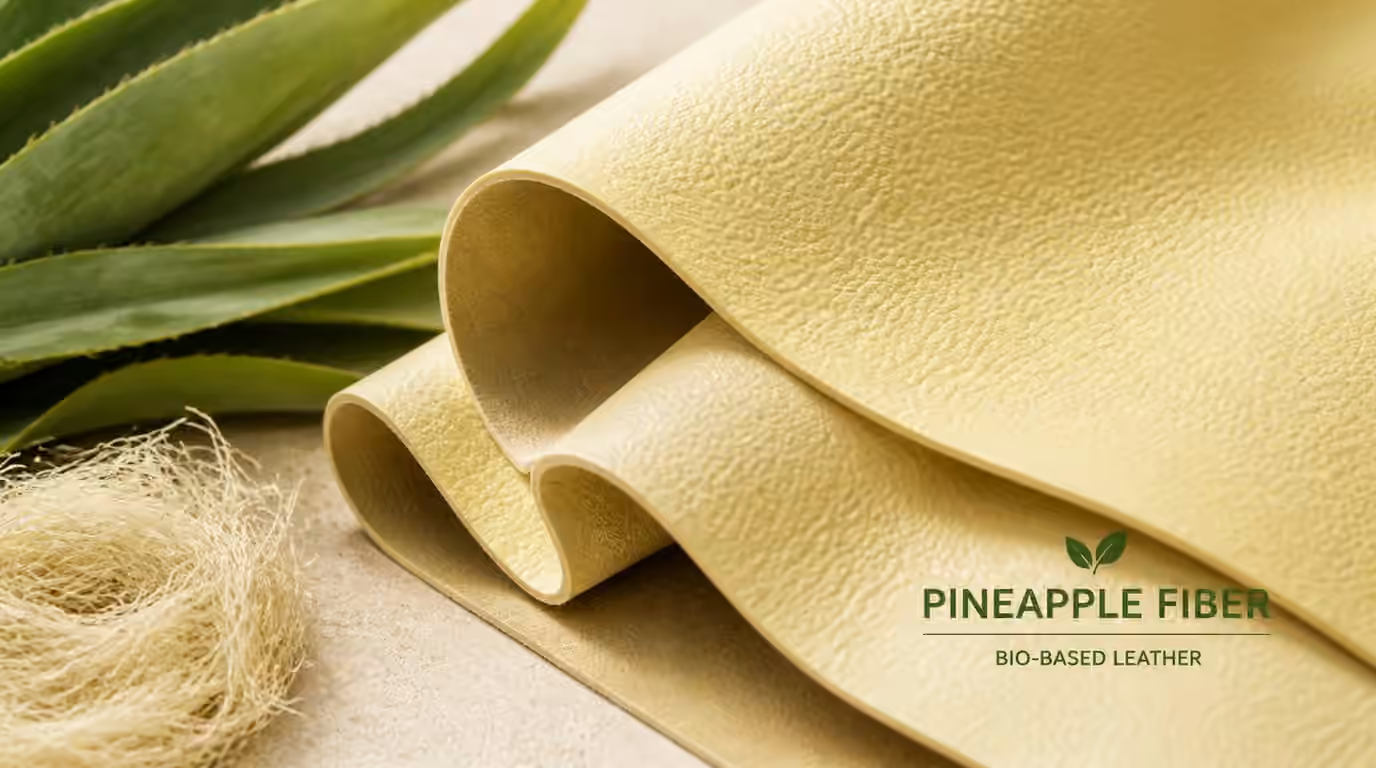
When people hear "vegan leather," most assume it just means synthetic leather. But strictly speaking, vegan leather is a broad term. Anything without animal content counts — petroleum-based PU and PVC, as well as newer plant-based materials.
In the narrower sense, the interesting part — the one investors and brands keep betting on — is Plant-Based Leather. It's made from agricultural waste or natural plant sources like pineapple leaves, cactus, apple pomace, grape pomace, and mushroom mycelium. Physical or chemical processing turns these into sheet materials that look and feel close to animal leather.
The key difference from pure PU/PVC vegan leather is the raw material source: plant-based leather contains at least some renewable plant fiber, instead of relying entirely on petrochemical polymers. That's why the industry prefers to call it "next-gen materials."
One honest note upfront: to get enough abrasion resistance, waterproofing, and structural strength, almost every plant-based leather on the market today still needs some PU resin or PLA (polylactic acid) as a binder or coating. So a truly "100% plant" leather is still rare — most products are really a mix of plant fiber plus a small amount of polymer. We'll get into this more in the manufacturing section below.
Common Plant Fibers on the Market
Plant-based leather has exploded in variety over the past few years — almost every agricultural waste product imaginable has been tried. Here are the more mature options that brands are actually using.
Common Plant Fibers on the Market
Plant-based leather has exploded in variety over the past few years — almost every agricultural waste product imaginable has been tried. Here are the more mature options that brands are actually using in plant-based leather.
1. Pineapple Leaf Fiber (PALF)
The flagship product is Piñatex, launched by Ananas Anam in 2015. It extracts fiber from Philippine pineapple leaf waste and combines it with PLA to form a non-woven base material. Nike, H&M, and Hugo Boss have all used it for footwear and accessories.
2. Corn Leather
Examples include the wax-coated corn-waste canvas Veja uses in its CAMPO sneakers, and the corn-based bio-polyurethane leather from Valentino Garavani. Both use corn stalks and corn cobs — agricultural waste — as raw material.
3. Cactus Leather
The Mexican company Desserto leads this category. It uses nopal cactus pads, which need no irrigation and no pesticides. The pads are crushed to extract fiber, then made into a coatable pulp.
4. Apple Leather
The Italian company Frumat is the leading name here. It uses apple peel and core waste left over from juice production. The finished material is soft and smooth, often used for notebook covers, cardholders, and other small goods.
5. Grape / Wine Leather
The Italian company Vegea leads here, extracting plant oil and cellulose from grape skins, seeds, and stems left over from winemaking. The raw material costs next to nothing.
6. Natural Rubber + Plant Fiber Composite (Mirum)
Mirum is made by the US company NFW (Natural Fiber Welding). Instead of a PU/PVC coating, it presses natural rubber, plant wax, and agricultural waste fiber directly into one solid material. NFW claims it contains no plastic at all.
Advantages of Plant-Based Leather
✓ Less Reliance on Animals
No animal farming or slaughter involved. It also avoids the high water use, high emissions, and deforestation risk that come with livestock farming.
✓ Some Steps Are More Eco-Friendly
Tanning cowhide uses an enormous amount of water, while drought-tolerant crops like cactus need almost no irrigation. Plant-based materials generally have a lower carbon footprint than animal leather — but if the finishing process uses heavy PU coating, that advantage shrinks. "Plant-based" doesn't mean "zero carbon"; it depends on the exact formula.
✓ Some Products Biodegrade More Easily
Materials without PU/PVC coating, like Mirum, biodegrade better. Materials with PLA+PU coating, like Piñatex, don't fully biodegrade. Don't be misled by the idea that "plant-based" automatically means "biodegradable."
✓ More Varied Texture
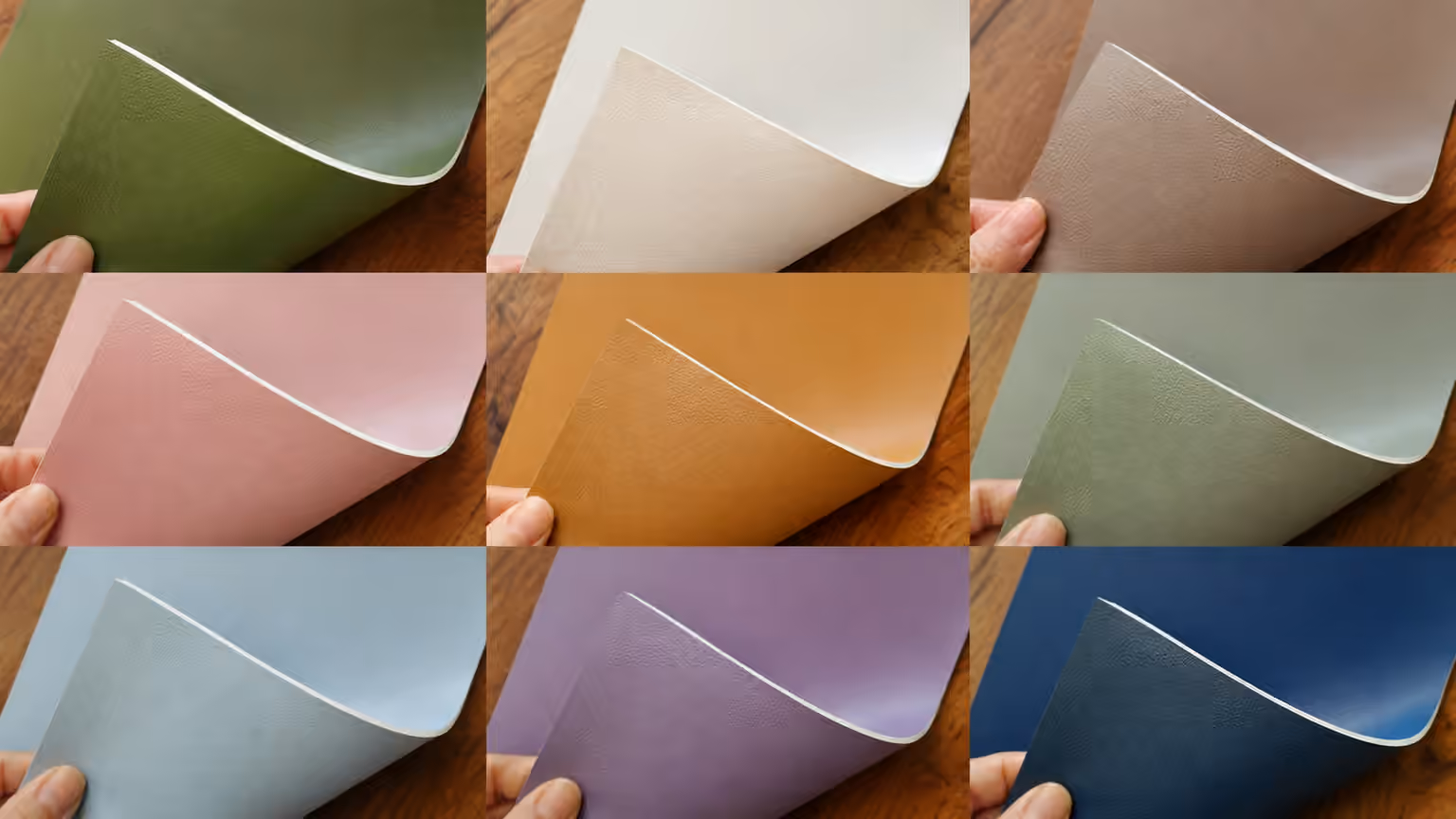
Cactus leather has a fine, tight grain; pineapple fiber has a natural mottled look; apple leather is soft with a slight sheen. Together they give designers new options beyond animal leather and PU leather.
How Plant-Based Leather Is Made — Using Pineapple Fiber as an Example
Using Piñatex's typical process as an example, production breaks down into six steps:
| Step | What Happens | Details |
|---|---|---|
| 1. Harvest Pineapple Leaves | Collect leaves after the pineapples are picked | The leaves are normally discarded. Factories select suitable leaves as raw material, using no extra land or water. |
| 2. Extract Fiber | Crush the leaves and scrape out cellulose fiber | On-site decorticating machines do the work. Each leaf yields only about 2.5–3.5% fiber by weight, so it takes over 400 leaves to make one square meter of material. The leftover biomass is turned into fertilizer or fuel. |
| 3. Degum and Clean | Remove pectin and excess sugar from the fiber surface | Enzymes or mild chemical treatments make the fiber soft and breathable. |
| 4. Dry | Dry the cleaned fiber | Drying relies mainly on sunlight, with machine drying used during the rainy season to save energy. |
| 5. Form Non-Woven Felt (Piñafelt) | Needle-punch and heat-press the fiber with PLA | PLA is a biodegradable plastic made from corn starch. The result is a felt-like base material, and this step determines the final thickness and strength. |
| 6. Coat and Finish | Apply coating, dye, and emboss | A polyurethane resin coating is applied for waterproofing and abrasion resistance, followed by dyeing and embossing. The finished material is cut into rolls and shipped to brands. |
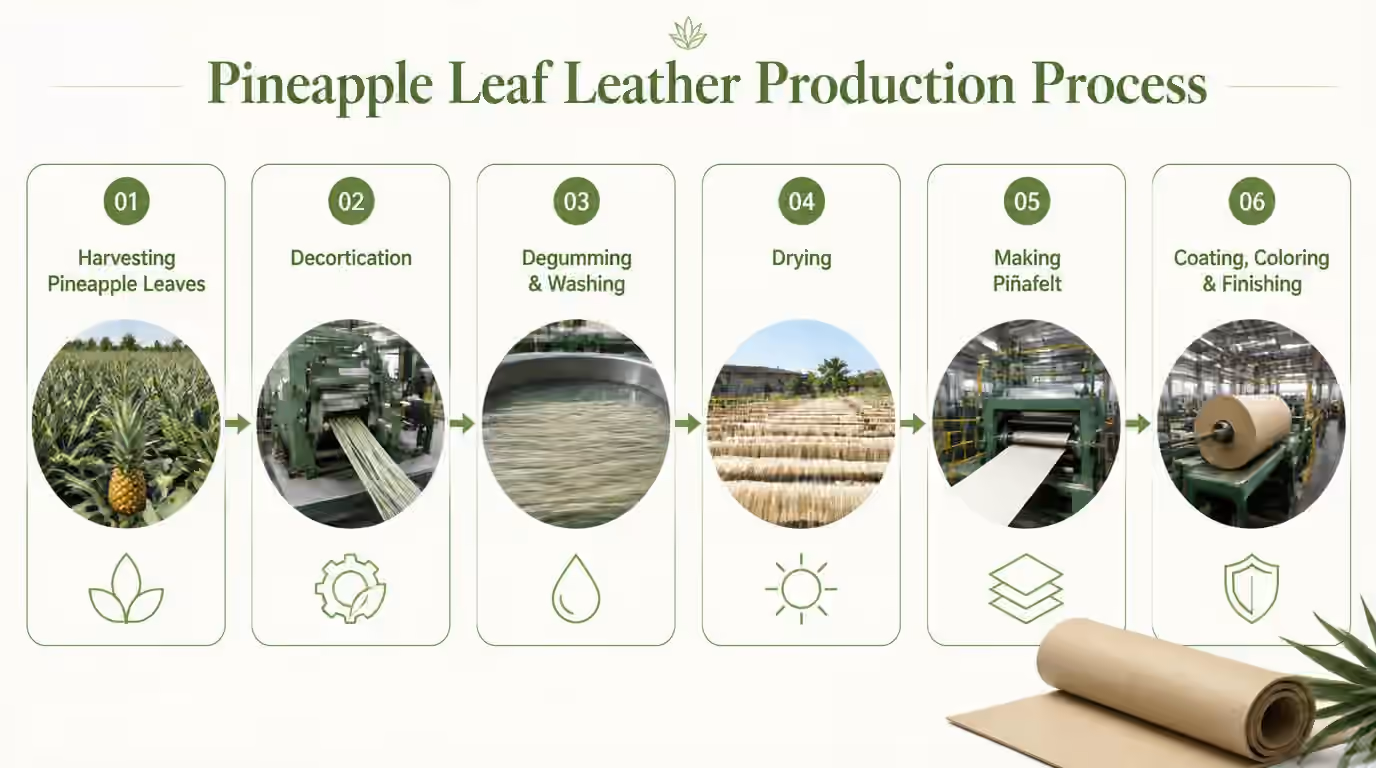
The whole process spans both the raw material source and the finishing facility, and typically takes anywhere from a few weeks to several months. That's one reason plant-based leather generally costs more than ordinary PU leather — the supply chain is longer, and each finished piece requires a larger weight of raw material.
Where Is Plant-Based Leather Used ?
Fashion Accessories and Limited Editions
Car Interiors
Furniture and Bag Linings
Final Note
Hualixing New Materials Co., Ltd. offers wholesale plant-based leather for buyers. Contact us to learn more.
FAQ
What is plant-based leather?
Plant-based leather is made from agricultural waste or natural plant sources like pineapple leaves, cactus, apple pomace, grape pomace, and mushroom mycelium. These materials are processed into sheets that look and feel close to animal leather.
Is plant-based leather the same as vegan leather?
Not exactly. Vegan leather is a broad term for any leather with no animal content, including petroleum-based PU and PVC. Plant-based leather is a narrower category that contains at least some renewable plant fiber instead of relying entirely on petrochemical polymers.
Is plant-based leather 100% plant-based?
Rarely. To get enough abrasion resistance, waterproofing, and strength, most plant-based leather on the market still uses some PU resin or PLA (polylactic acid) as a binder or coating. Most products are a mix of plant fiber and a small amount of polymer.
What are the most common types of plant-based leather? The most established options are pineapple leaf fiber (such as Piñatex), corn leather, cactus leather, apple leather, grape or wine leather, and natural rubber with plant fiber composites.
Is plant-based leather biodegradable?
It depends on the formula. Materials without a PU or PVC coating, like Mirum, biodegrade more easily. Materials with a PLA and PU coating, like Piñatex, don't fully biodegrade. "Plant-based" doesn't automatically mean "biodegradable."
Is plant-based leather more eco-friendly than animal leather?
In many cases, yes. It avoids animal farming and the heavy water use of cowhide tanning, and drought-tolerant crops like cactus need almost no irrigation. But if the finishing process uses a heavy PU coating, the advantage shrinks, so the exact formula matters.
Why does plant-based leather cost more than PU leather?
The supply chain is longer, and each finished piece needs a larger weight of raw material. For example, pineapple leaves yield only about 2.5–3.5% fiber by weight, and it takes over 400 leaves to make one square meter of material.
What is plant-based leather used for?
It's mainly used in fashion accessories and limited editions, car interiors, and furniture and bag linings.
Get a Free Quote
Hualixing New Materials Co., Ltd. is a factory-direct synthetic leather manufacturer with 30 years of manufacturing experience, specializing in OEM/ODM services. We manufacture and supply PVC leather, PU leather, silicone leather & vegan leather for automotive, furniture, upholstery, marine and more. Custom orders are available by yard or meter. Tell us your needs, and we will respond within 24 hours.