Don't Throw Away a Worn Sofa: Self-Adhesive Leather Can Save It for Little Money
Table of Contents
The Short Answer
Is your sofa only worn, cracked, or faded on the surface, with a frame that is still good? Then you can fix it with self-adhesive leather in one afternoon. The cost is only a small part of the price of a new sofa. You just need to choose the right material, clean the surface well, and not rush when you stick it on.
Here is how to do it, step by step.
Step 1: Is Your Sofa Worth Saving?
I check two things:
- The frame and the foam. When you sit down, does the sofa stay firm, without sinking, shaking, or making noise? If yes, the sofa is still healthy.
- The damage. Armrests, cushion corners, and small cracks are all easy to repair. But if the whole surface is turning to powder and peeling off, it is time to buy a new sofa.
If the old leather falls apart when you touch it, the new leather will not last long. The base under it is already too weak.
Step 2: Know What Material You Are Buying
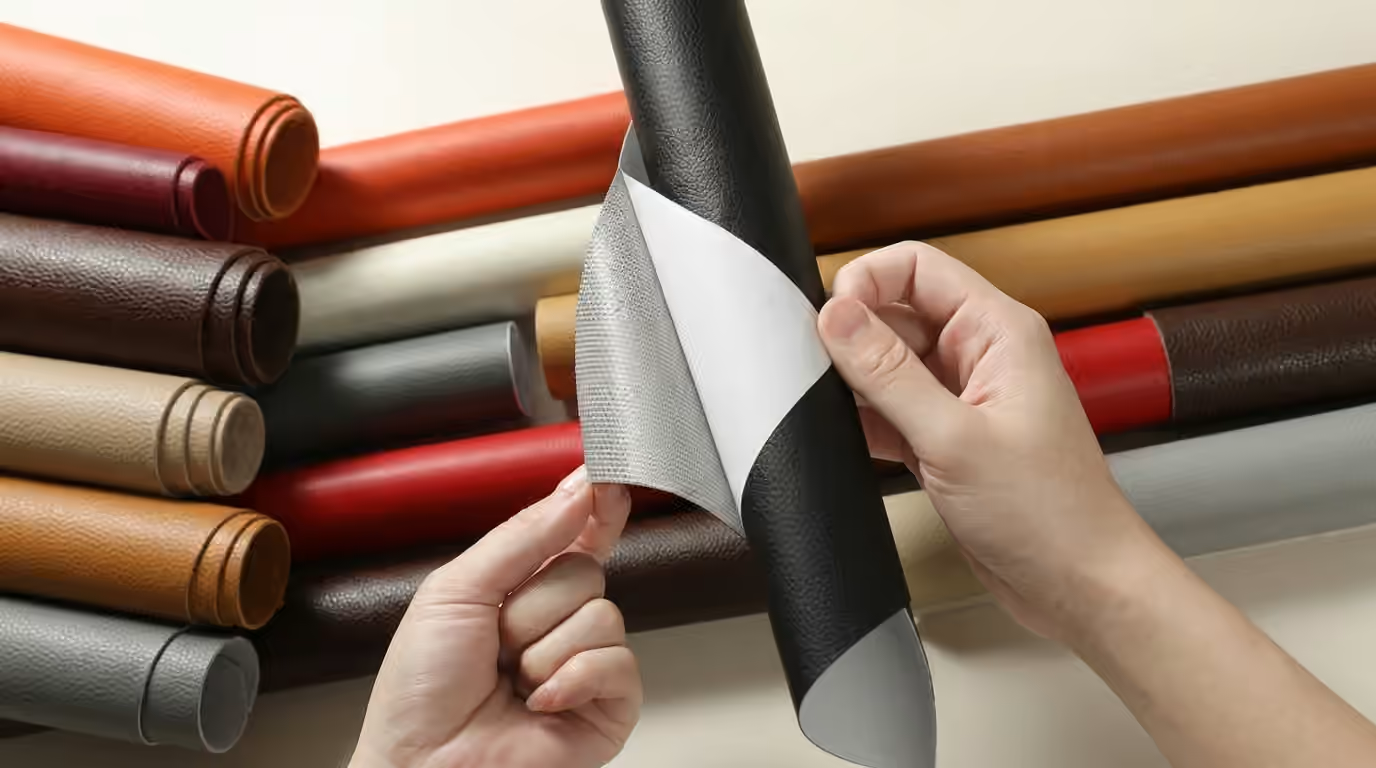
Most self-adhesive leather is made of PU or PVC, with glue on the back. One thing to remember: PU leather is not real leather. In the United States, the Federal Trade Commission (FTC) has rules about how to label "leather" and "imitation leather" products. They are in the Guides for Select Leather and Imitation Leather Products. The rules help stop buyers from being misled. So read carefully when you shop. Check whether the seller says PU, microfiber, or something else. Do not be fooled by words like "real leather feel."
Step 3: Choose the Material. Look at These Three Things
1. Safety and eco-friendly certificates
You sit on a sofa every day, and your skin touches it. So I first look for third-party tests. OEKO-TEX® STANDARD 100 is a well-known international test for harmful substances in textiles. The EU's REACH regulation controls the registration and limits of chemicals. Products sold in Europe almost always have to follow it. If a seller can show you a test report, that is much more reliable than just saying "eco-friendly."
2. Smell and VOCs
It is normal for new materials to have some smell. But if the smell is sharp, be careful. The US Environmental Protection Agency (EPA) has a page about how volatile organic compounds (VOCs) affect indoor air. It says indoor VOC levels are often higher than outdoor levels. So unpack the material and let it air out first. Open the windows after you finish, too. If you want low emissions, look for products with UL GREENGUARD certification.
3. Feel and thickness
Thin material wrinkles easily, and the old color can show through. Thick material is hard to stick on corners. I prefer medium thickness with a fabric layer on the back. It sticks more smoothly and the edges are less likely to lift.
Step 4: Get Your Tools Ready
You do not need anything special. You probably have most of these at home:
- Scissors or a utility knife
- A tape measure
- A damp cloth and a little mild cleaner
- A hair dryer (it is very useful, and I will explain why below)
- A squeegee. If you don't have one, use an old bank card.
Step 5: Stick It On, in This Order
① Clean the surface. Wipe off dust and oil with a damp cloth, then let it dry. Do not skip this step. When edges lift later, the problem is usually here. If there are loose pieces of old leather around the damage, cut them off first.
② Measure, and leave extra. Make the patch 2 to 3 cm bigger than the damage on every side. Cut the corners into round curves. Sharp corners are easily caught by clothes and lifted.
③ Test first, then peel the backing. Put the leather in place without peeling anything. Check that the pattern goes the right way. If the material has a texture, a wrong direction will look very obvious.
④ Peel a little, stick a little. Do not remove all the backing at once. Peel back a small part from one end and stick it down. Then pull off the backing slowly, and push the leather outward with the squeegee as you go. This way, there are almost no air bubbles.
⑤ Fix bubbles and wrinkles. Push small bubbles toward the edge with the squeegee. For a big bubble, make a tiny hole with a needle, then press it flat. On curved places, use the hair dryer on low heat for a few seconds. The leather becomes soft and fits the shape better.
⑥ Press the edges and finish. Press hard along all the edges. Then wait a few hours before you use the sofa. Do not sit on it right away. Give the glue time to bond.
Common Mistakes. Avoid Them
- Sticking on an oily or waxy surface. The glue will not hold, and the edges will lift soon.
- Pulling the leather too tight. Do not stretch it when you stick it on. Stretched leather slowly shrinks back, and the edges will curl up.
- Choosing color from a picture only. Screen colors are often different from the real thing. Ask for a small sample first, and compare it under the lights in your home.
- Not taking extra care of high-stress places. The front edge of a cushion and the top of an armrest get a lot of force. Use a bigger patch there, and press the edges down firmly.
Its Limits. Let Me Be Honest
Self-adhesive leather is a repair, not a replacement. It works well for small damage. It is also good if you want to change the color of your sofa. But on large areas that take a lot of force again and again, it will not last as long as a full new cover. Also, 70% of the result depends on the material, and 30% depends on your skill. If you work with patience, the result is usually good.
Summary
- If the frame is fine and only the surface is worn, it is worth fixing.
- When you choose material, check the certificates, the smell, and the thickness. Do not look at price only.
- Clean the surface well before you start. Peel and stick at the same time. Do not peel it all at once.
- Let the room air out for a while, then use the sofa as normal.
With one afternoon and a little patience, your old sofa can stay with you for many more years.
If you need large amounts of synthetic leather, artificial leather, or imitation leather, please contact us.
FAQ
Q: What kinds of sofas can I use self-adhesive leather on?
It works on most surfaces that are flat and clean. This includes PU leather, PVC artificial leather, real leather, and smooth fabric. But it will not stick well to fabric sofas with fuzz or small balls of fiber. It also won't stick to leather that is old and turning to powder. Do not force it in those cases. If you are not sure, stick a small piece in a hidden corner. Wait two or three days and see if the edges lift.
Q: How long will it last after I stick it on?
There is no fixed answer. It depends on three things: the quality of the material, how clean the surface was, and how much force the spot takes. Places with a lot of rubbing, like the front of a cushion or the top of an armrest, will wear out faster. If you press the edges down firmly and avoid scratching with sharp things, it is normal for it to last several years.
Q: What if it smells after I stick it on?
It is common for new material to have a little smell. Usually it goes away in a few days in a place with fresh air. After you finish, open the windows. Do not close the room and sit there right away. If the smell is very sharp, or does not go away for a long time, the material may have a problem. Do not keep using it. Ask the seller for a test report, or just choose another product.
Q: What if I stuck it crooked, or there are bubbles? Can I fix it?
Yes. The glue on self-adhesive leather usually does not set right away. In the first few minutes, you can still peel it off and adjust it. Push small bubbles to the edge with a squeegee. For big bubbles, make a tiny hole with a needle and press it flat. If it has been stuck for several hours and the glue is firm, warm it with a hair dryer on low heat. The glue will soften, and you can lift it slowly and stick it again. Go slowly and do not pull hard. If you do, you may tear the sofa surface too.
Get a Free Quote
Hualixing New Materials Co., Ltd. is a factory-direct synthetic leather manufacturer with 30 years of manufacturing experience, specializing in OEM/ODM services. We manufacture and supply PVC leather, PU leather, silicone leather & vegan leather for automotive, furniture, upholstery, marine and more. Custom orders are available by yard or meter. Tell us your needs, and we will respond within 24 hours.