How to Prevent Synthetic Leather Quality Disputes Before You Ship
Table of Contents
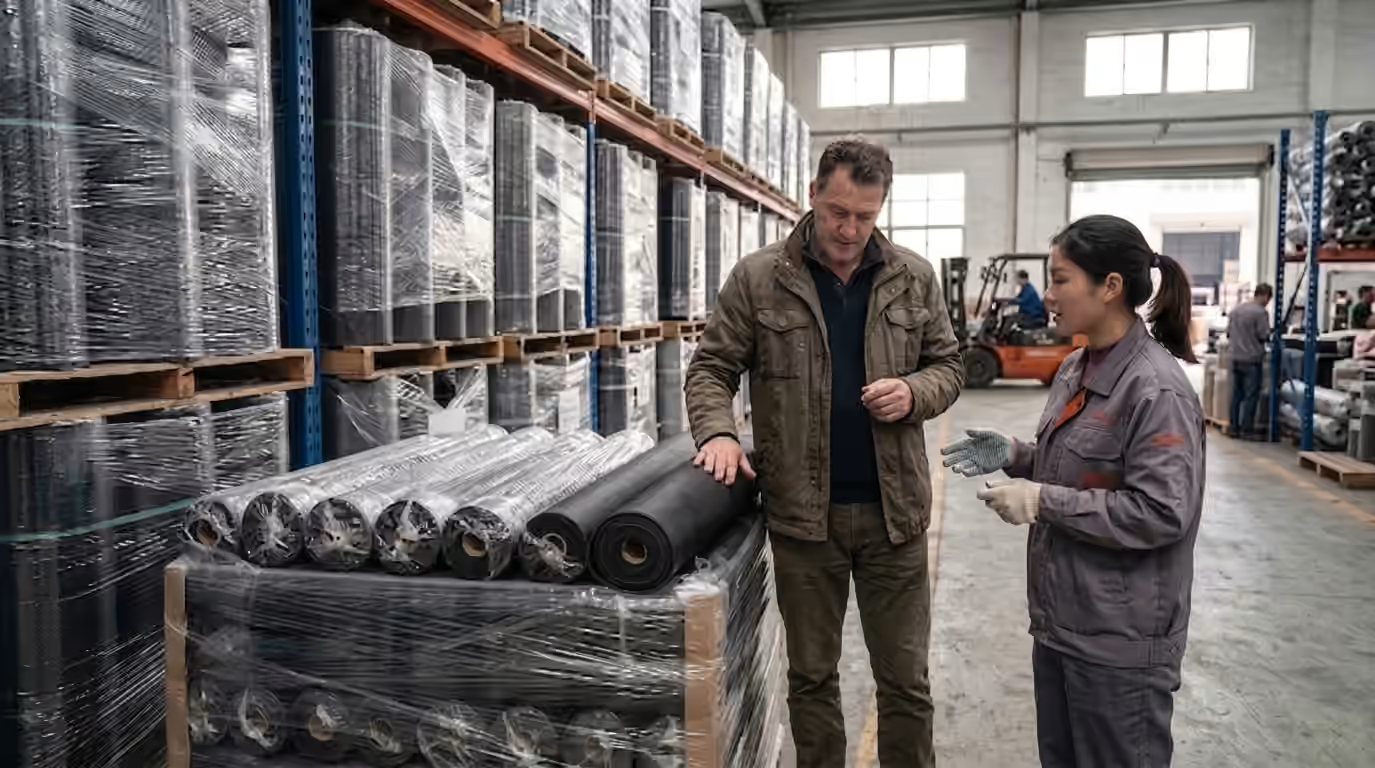
Most quality disputes on synthetic leather orders are not about a bad product. They happen because the buyer and the factory never agreed on the same standard from the start. After years in this trade, I've found four steps that stop this problem before goods ever leave the factory: lock in a sealed sample, put every spec in writing, watch key points closely during production, and run a full check before shipping. Here's why each one matters.
A "Quality Problem" Is Usually a Misunderstanding
Nine times out of ten, when a dispute breaks out, the product itself isn't the real problem. The real problem is that the two sides never pictured the same thing when they used the same words.
Here's a real case. A client once asked for a "premium, soft-touch" PU leather. We made what we believed was premium, based on our own idea of soft. But when the goods arrived, the client said the feel was all wrong. It turned out they wanted something close to baby-skin leather — light and gentle. What we sent was the standard soft finish used for furniture. Two sides, two different pictures of "soft," and neither side was wrong by their own logic.
This kind of gap happens more often than you'd think. Without one shared standard both sides agree on up front, a dispute is just a matter of time.
Step 1: Never Skip the Sealed Sample
Before bulk production starts, both sides need to sign off on one "golden sample." Every batch made after that gets checked against this exact sample — color, texture, thickness, hand-feel, all of it.
This sample isn't something you glance at once and put away. Keep it on file, give it a number, note the date, and link it to the order. If a dispute comes up later, this sample is the only fair judge.
We once had a client say the color looked off after the goods arrived. We sent our retained sample for a side-by-side check, and the real issue turned out to be the lighting in their warehouse, not our product. That one sample closed the case in minutes. Without it, neither side could have proven anything.
Step 2: Put Every Spec in Writing
Words like "durable," "soft," or "high quality" mean almost nothing in a contract, because every person pictures something different when they read them.
Specs that actually protect both sides come as hard numbers: thickness in millimeters, whether the base fabric is knitted or woven, tensile strength, and a set ΔE range for color match. Once these numbers go into the contract or order confirmation, there's much less room for the two sides to drift apart.
We learned this the hard way — orders where we skipped this step to save time ran into far more trouble later. Now, no matter how small the order, we go through every spec line by line with the client. Ten extra minutes upfront beats a big argument later.
Step 3: Watch Three Things Closely During Production
Even with a signed sample and clear specs, quality can still slip if the production line isn't tightly controlled. The three biggest causes of batch-to-batch differences are coating thickness, foaming stability, and interlayer bonding strength.
We run spot checks throughout the run: a thickness gauge for coating, regular peel tests for bond strength, and a full inspection record for every batch, traceable back to the exact date and machine. Once, we caught a batch where bond strength kept drifting mid-run. We stopped the line, traced it to a bad adhesive ratio, fixed it, and only then let production continue. That batch never left the factory with a problem — catching it early costs far less than fixing it after final inspection.
Step 4: Never Skip the Final Inspection
Before the goods go into the container, run one more full check — color, appearance, thickness, and basic performance — against the approved sample and the written specs.
This check can be done in-house, by the buyer in person, or by a third-party inspector such as SGS, Gmicro Testing or Bureau Veritas. One first-time client wasn't fully confident in us yet, so they brought in an outside inspector. The report came back clean and detailed, which put both sides at ease. Every order after that went even more smoothly — that's really how trust gets built, one step at a time.
Buyers Have Homework Too
A reliable supplier is only half the equation. If you're working with a new factory for the first time, start with a small trial order to check quality and lead time before you scale up — don't jump straight into a large order.
Put your quality requirements in writing in the contract, and stay in touch during production instead of waiting until the goods arrive to ask how things went. Once you've worked with the same supplier for a while, both sides start to understand each other's rhythm. That kind of trust isn't built in one order — it takes time.
The Bottom Line
Looking back at every dispute I've handled, very few came from a bad product. Almost all of them came from a gap in communication. Get these four steps right — sealed sample, written specs, tight production checks, and a final inspection — and you'll head off most disputes before they start. The rest comes down to patience and talking things through.
Hualixing New Materials Co., Ltd. is a B2B supplier of a wide range of synthetic and artificial leather. We can make custom products based on your samples. Welcome to contact us for more details.
FAQ
What is a sealed sample in leather manufacturing?
A sealed sample (also called a golden sample) is the one approved sample both the buyer and the factory sign off on before bulk production starts. Every later batch is checked against this exact sample for color, texture, thickness, and feel.
Why do quality disputes happen in synthetic leather orders?
Most disputes aren't caused by a bad product. They happen because the buyer and factory never agreed on a clear, shared standard before production started.
Which inspection agencies check synthetic leather quality?
Common third-party inspectors include SGS, Gmicro Testing, and Bureau Veritas. Buyers can also send their own staff or rely on the factory's in-house inspection team.
How can a new buyer avoid problems with a synthetic leather supplier?
Start with a small trial order before scaling up, put every quality requirement in writing in the contract, and stay in touch with the factory during production instead of waiting until the goods arrive.
Get a Free Quote
Hualixing New Materials Co., Ltd. is a factory-direct synthetic leather manufacturer with 30 years of manufacturing experience, specializing in OEM/ODM services. We manufacture and supply PVC leather, PU leather, silicone leather & vegan leather for automotive, furniture, upholstery, marine and more. Custom orders are available by yard or meter. Tell us your needs, and we will respond within 24 hours.