Pairing PVC Leather with Genuine Leather for Sofas: Pitfalls I've Hit and Lessons I've Learned
Table of Contents
Quick Summary
Mixing PVC leather with genuine leather can cut sofa costs by about 30% and reduce color complaints. The key: use real leather on high-touch areas, PVC on low-touch ones, and carefully match color, grain, sheen, thickness, and backing fabric.
I've been in the synthetic leather trade for close to 30 years — started in sales, later moved into the workshop to oversee quality control myself. I've worked with sofa factories by the dozens, maybe close to a hundred. The question I get asked most these days: can PVC leather really be paired with genuine leather? Does it look good together? Will it give itself away over time?Let's talk about that today — real lessons from actual production. No fluff, just practical points.
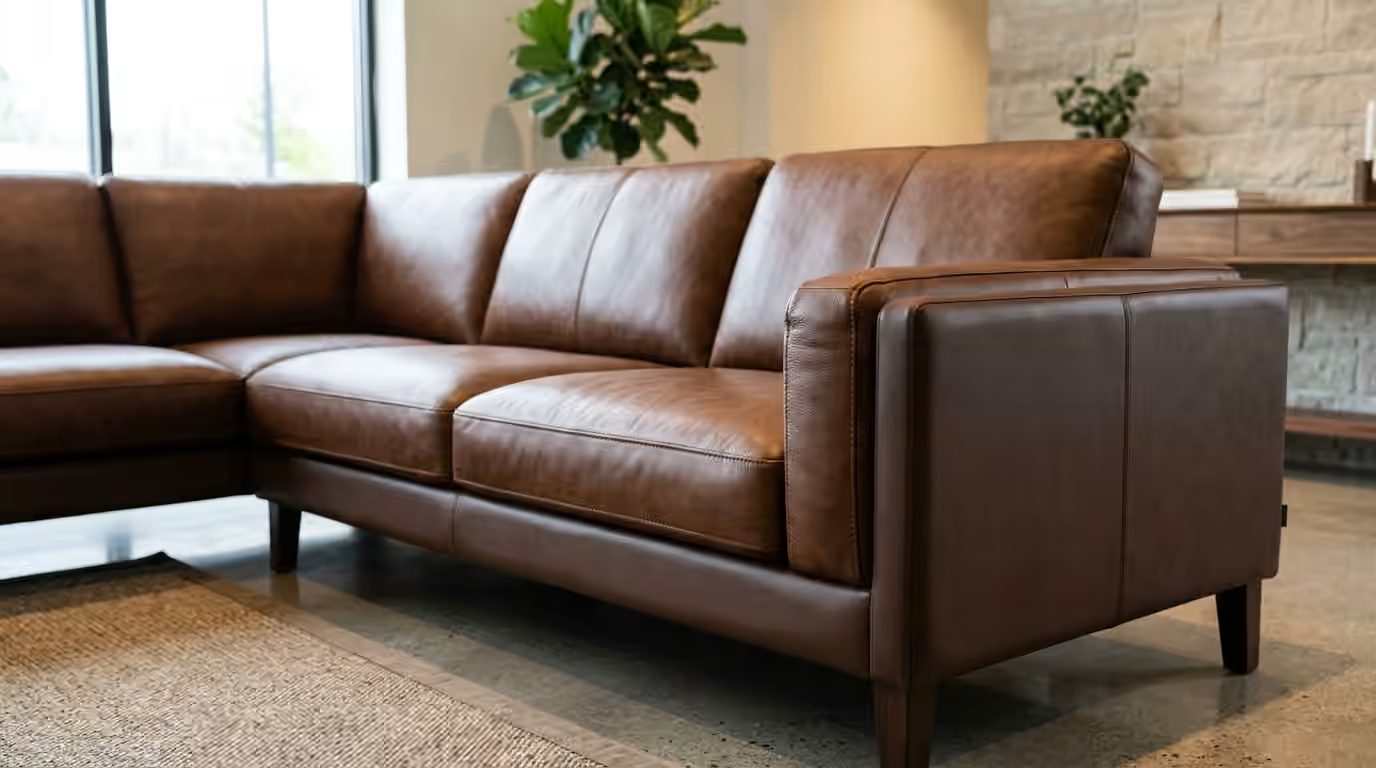
Why Mix the Two at All
Genuine leather has a mind of its own. On a single cowhide, the grain and thickness differ across the neck, back, and belly — you can spot color variation within the same batch, let alone between batches. A few years back, an export sofa client had an entire shipment rejected outright over color mismatch between leather batches. Freight and rework costs alone cost them several hundred thousand yuan.
After that, the client started mixing genuine leather with PVC leather: real leather on the spots people touch most — seat cushions, armrests, backrests — to keep that natural feel, and PVC leather everywhere people barely touch, like the sides, back panel, and base trim. That cut costs by roughly 30%, and color complaints basically stopped. Plenty of sofa factories use this approach now — nothing new — but few do it well.
Real Leather Where Touch Matters, PVC Leather Where It's Mostly Just Seen
For spots that get rubbed daily and sit against skin — seat cushions, the inside of the armrests, backrests — stick with genuine leather. PVC leather still falls a bit short on breathability and feel there. For side panels, the back panel, the base, and leg guards, PVC leather works fine — it can even outlast genuine leather in abrasion resistance.
One detail small factories often miss: at the seams where the two materials meet, like where the armrest joins the side panel, always sample ahead of time to confirm the color and grain transition looks natural. From a distance it might look fine, but up close, a mismatched seam stands out right away. Most customer complaints trace back to exactly this kind of detail.
Getting the Colors to Match
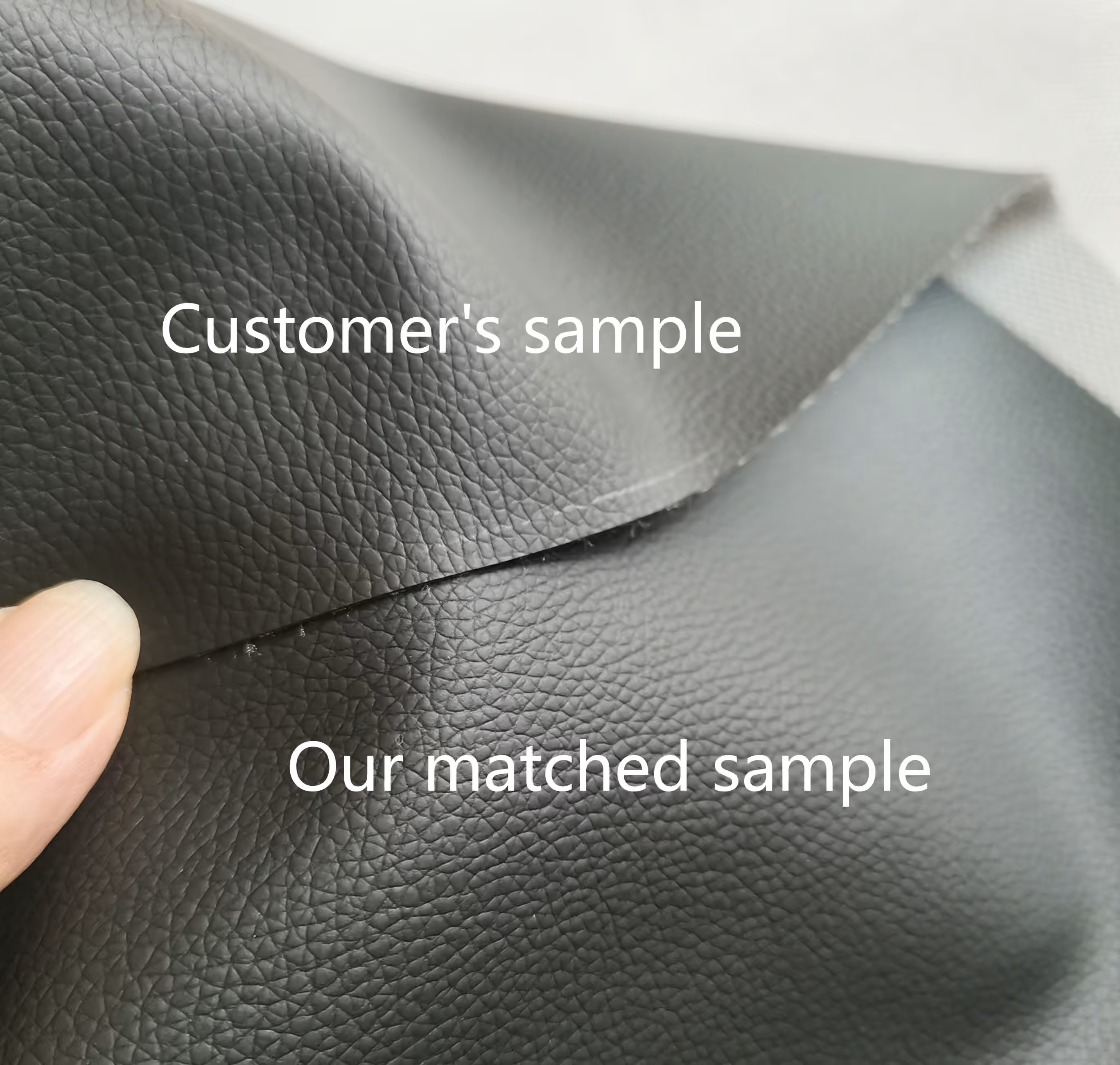
This is, in my view, the hardest part of the whole pairing process to get right.
When the genuine leather comes in, don't rush to sample. Check it under at least two light sources — regular daylight-tone fluorescent and warm light. A lot of color mismatches show up because the leather looks fine under a showroom's warm lighting, then gives itself away under natural light at home. I've been burned by this more than once.
Reliable PVC leather manufacturers now use a spectrophotometer to measure color — turning the genuine leather sample's hue, saturation, and brightness into data, then formulating the pigment to match. That keeps batch-to-batch color variation within a tight range. Small workshops that mix color by eye alone can show visible variation even within a single batch — best to avoid those.
Grain and Sheen Need to Match Too
Getting the color right is just step one. If the grain and sheen are off, it'll still look fake at a glance.
PVC leather can now reproduce most genuine leather grains — the fine texture of Nappa, the pebbled surface of lychee grain — using an embossing roller. But you can't just grab an off-the-shelf roller; it has to be custom-engraved to match the actual leather sample, and going through three to five rounds of sampling is normal. Don't expect to nail it on the first try.
Gloss level is another thing that's easy to overlook. Matte, semi-matte, glossy — if the genuine leather and PVC leather don't match in sheen, the difference shows up clearly under light, especially for sofas near a window, where side light makes the seam impossible to hide.
Don't Cut Corners on Thickness and Backing Fabric
This part gets overlooked easily, but it's actually critical.
Genuine leather usually runs 1.0 to 1.4mm thick, depending on the cut and hide quality. If the PVC leather's thickness is too far off, the seam will show a visible step at the edge binding. This matters a lot for sofas exported to Europe or the US, where inspection standards are strict — this kind of detail gets rejected and sent back for rework easily. PVC leather on the market ranges from 0.6mm to 1.5mm thick. Always compare against the actual genuine leather sample before choosing — don't just go by the spec sheet.
The backing fabric matters too. Knit backing stretches well, good for complex-shaped parts. Woven backing is more stable, good for flat panels. Foam backing gives a softer seat feel. Pick the wrong backing, and the material won't stretch to match the genuine leather during upholstering — it'll wrinkle or pull too tight. An experienced craftsman can spot this just by feel.
PVC Leather Durability Has Reached Top-Tier Levels Now
Honestly, PVC leather from China two decades ago — the smell, how fast it cracked — didn't really deserve to be called "faux leather." A lot of customers still picture PVC leather that way.
But materials and coating processes have improved massively in recent years. High-end PVC leather can now pass abrasion tests at tens of thousands of cycles without the surface breaking, and it generally meets yellowing- and UV-resistance standards too. Legitimate export manufacturers can now pass environmental thresholds like REACH as well. Compared to genuine leather, PVC leather has no natural blemishes, gives a higher cutting yield, and has a clear cost advantage at scale — especially well suited to hotels, cinemas, and offices, where usage is heavy and a uniform look matters.
Of course, cheap PVC leather still exists — the kind that turns sticky and peels within six months. When it comes to choosing materials, the old saying still holds: you get what you pay for. Don't let a bargain cost you more down the line.
Final Thoughts
Pairing genuine leather with PVC leather isn't cutting corners — done right, it's a real way to balance cost and quality. But that means putting in the work to match color, grain, sheen, and thickness. Spend more time sampling upfront; it beats reworking after a full production run ships. Stay in this trade long enough, and you'll see: skimp on the details, and it always catches up with you.
One PVC leather supplier worth checking out: Hualixing New Materials Co., Ltd, for buyers sourcing direct at wholesale. If you want to learn more,please contact us.
FAQ
Q: Can PVC leather be paired with genuine leather on a sofa?
Yes. Done right, it balances cost and quality. Use genuine leather on high-touch areas like seat cushions, armrests, and backrests, and PVC leather on the sides, back panel, and base trim.
Q: How much can mixing the two materials save?
In the case above, the client cut costs by roughly 30%. Color complaints also basically stopped, because PVC leather is far more consistent from batch to batch.
Q: How do I match the color of PVC leather to genuine leather?
Check the genuine leather under at least two light sources, such as daylight-tone fluorescent and warm light. Then choose a manufacturer that uses a spectrophotometer to measure color and formulate the pigment, instead of mixing by eye.
Q: Can PVC leather match the grain and gloss of genuine leather?
Mostly, yes. Grains like Nappa or lychee can be reproduced with a custom-engraved embossing roller, but three to five rounds of sampling is normal. Sheen (matte, semi-matte, or glossy) must match too, or the seam shows under light.
Q: How thick should PVC leather be?
Genuine leather usually runs 1.0 to 1.4mm. PVC leather on the market ranges from 0.6mm to 1.5mm, so compare against your actual genuine leather sample. A big thickness gap leaves a visible step at the seam.
Q: Which backing fabric should I choose?
Knit backing stretches well and suits complex shapes. Woven backing is more stable and suits flat panels. Foam backing gives a softer feel. The wrong choice causes wrinkles or pulling during upholstering.
Get a Free Quote
Hualixing New Materials Co., Ltd. is a factory-direct synthetic leather manufacturer with 30 years of manufacturing experience, specializing in OEM/ODM services. We manufacture and supply PVC leather, PU leather, silicone leather & vegan leather for automotive, furniture, upholstery, marine and more. Custom orders are available by yard or meter. Tell us your needs, and we will respond within 24 hours.