How to Judge Synthetic Leather Durability Through Tensile Strength and Tear Strength
Table of Contents
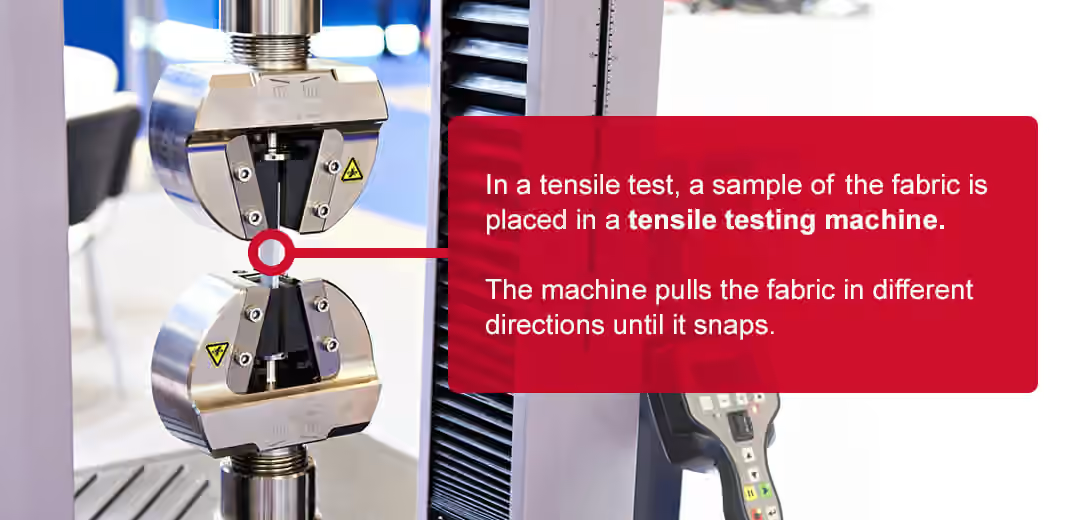
No single number tells you whether synthetic leather will hold up over time. Real durability comes from four things working together: backing fabric quality, coating formula, how well the layers bond, and overall flexibility. Tensile strength alone can be misleading — a material can test strong under a straight pull and still crack after repeated folding, or tear easily once a small nick appears at an edge or seam. That's why judging quality means looking at tensile strength, elongation at break, and tear strength together, and paying attention to how the material actually fails, not just the number it scores.
Here's what each of these means and how to test for them properly.
Tensile Strength Doesn't Equal Overall Durability
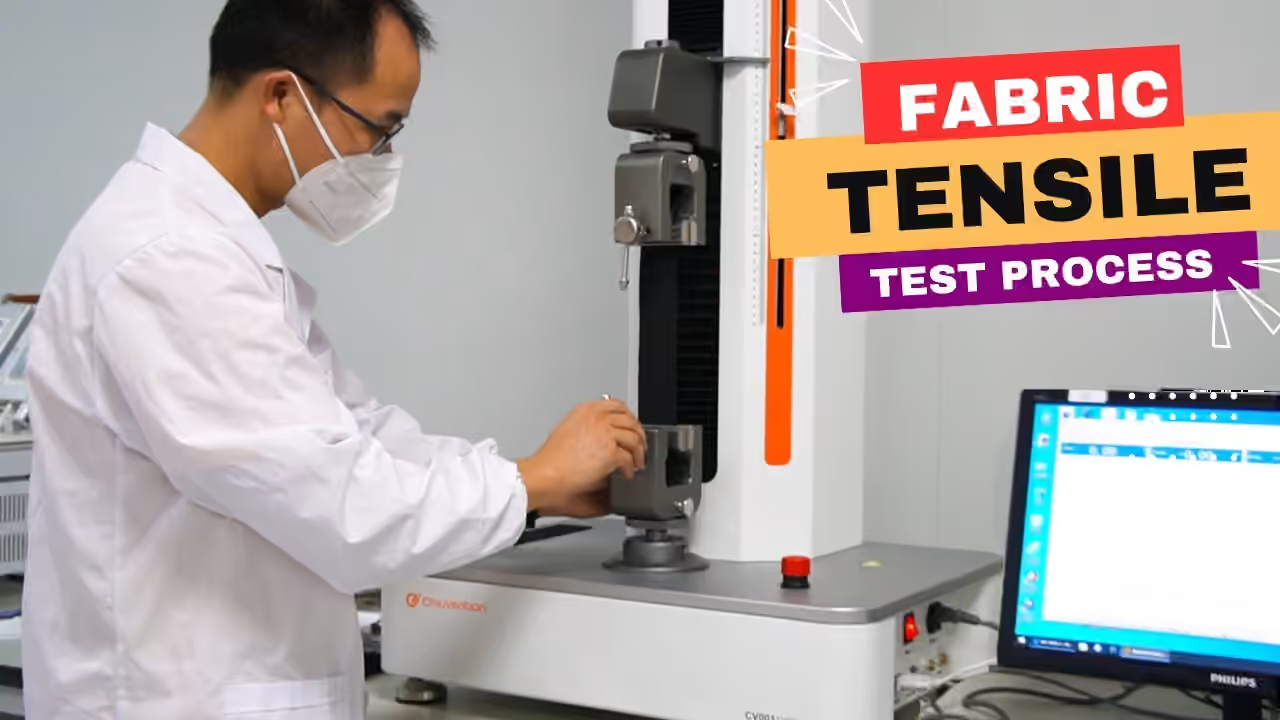
Tensile strength measures the maximum force a material can withstand under continuous pulling before it breaks. It reflects the overall load-bearing capacity of synthetic leather. But high tensile strength doesn't necessarily mean the material will hold up well over time.
For example, a material might have a very strong backing fabric, but if the PVC or PU surface layer lacks flexibility, it can still crack after repeated folding. That's why judging synthetic leather quality means also looking at elongation at break, tear strength, and how the material actually fails.
Elongation at break tells you how far a material can stretch before it snaps — it reflects the material's elasticity and stretch capacity. Good synthetic leather needs a balance between strength and flexibility.
The Difference Between Tensile Strength and Tear Strength
Tensile strength measures how well a material resists being pulled apart as a whole. Tear strength measures something different: once a nick or cut appears, how well the material resists that tear spreading further.
In real-world use, tear strength matters just as much. Furniture leather takes ongoing weight and folding from sitting; bag leather gets pulled at the edges, handles, and stitching. These stress points aren't simple pulling forces — they're concentrated points of stress, which makes them much more prone to tearing.
| Tensile Strength | Tear Strength | |
|---|---|---|
| What it measures | Force needed to pull the material apart as a whole | How well a tear resists spreading once a nick or cut starts |
| Where it matters most | Overall load-bearing capacity | Edges, handles, stitching, and other stress points |
| Typical use case | Judging general material strength | Judging real-world wear at seams and corners |
How Strength Testing Works
Proper testing usually involves:
- Taking samples from different spots on the material, to avoid errors from testing just one point
- Testing both the warp and weft directions, to check whether the structure is balanced
- Using a tensile testing machine to record the maximum force, elongation, and where the break occurs
Beyond just the numbers, it's just as important to watch how the material actually fails:
| Where the failure starts | What it tells you |
|---|---|
| Backing fabric breaks first | Weak base material strength |
| PVC or PU coating cracks first | Problem with the surface formula, flexibility, or aging resistance |
| Layers separate from each other | Weak lamination process or poor bonding |
Key Factors That Affect Synthetic Leather Strength
The backing fabric structure is the foundation of a synthetic leather's load-bearing capacity. Different backing fabrics — woven fabric, knit fabric, microfiber base fabric — directly affect tensile and tear performance.
The coating formula determines how well the material resists folding and cracking. A well-designed PVC or PU formula can maintain strength while extending the material's service life.
The lamination process matters too. Even with excellent surface performance, if the layers aren't bonded well, the material can delaminate over time.
Environmental factors — temperature, humidity, UV exposure, and hydrolysis — also affect the material's long-term stability.
Different Applications Prioritize Different Things
Different products have different requirements for synthetic leather performance:
| Application | What matters most |
|---|---|
| Sporting goods | Tensile strength, tear strength, and seam strength |
| Bags | Tear resistance at the edges, holes, and handle areas |
| Furniture | Crack resistance and durability after long-term folding |
So when evaluating synthetic leather quality, don't judge it by a single number. Truly good synthetic leather needs the backing fabric, coating, manufacturing process, and performance testing to all work together — only then will it hold up reliably in real-world use.
The Bottom Line
Hualixing New Materials Co., Ltd. is a B2B supplier of a wide range of synthetic and artificial leather. We can make custom products based on your samples. Welcome to contact us for more details.
FAQ
What's the difference between tensile strength and tear strength in synthetic leather?
Tensile strength measures how much force it takes to pull a material apart as a whole. Tear strength measures how well the material resists a tear spreading once a nick or cut has already started — a different kind of stress that matters most at edges, handles, and seams.
Does high tensile strength mean synthetic leather will last longer?
Not on its own. A material can score high on tensile strength but still crack after repeated folding if the surface coating lacks flexibility. Durability depends on tensile strength, elongation at break, and tear strength together.
What does it mean if the coating cracks before the backing fabric during testing?
It points to a problem with the surface formula — either its flexibility or its aging resistance — rather than a weak base fabric.
Which strength property matters most for furniture leather vs. bag leather?
Furniture leather needs to resist cracking after long-term folding and weight-bearing. Bag leather needs strong tear resistance at edges, holes, and handle areas, where stress concentrates.
How is synthetic leather tensile and tear strength actually tested?
Samples are taken from multiple spots on the material and tested in both the warp and weft directions using a tensile testing machine, which records the maximum force, elongation, and where the break occurs.
Get a Free Quote
Hualixing New Materials Co., Ltd. is a factory-direct synthetic leather manufacturer with 30 years of manufacturing experience, specializing in OEM/ODM services. We manufacture and supply PVC leather, PU leather, silicone leather & vegan leather for automotive, furniture, upholstery, marine and more. Custom orders are available by yard or meter. Tell us your needs, and we will respond within 24 hours.