PVC Leather vs. PU Leather for Travel Bags: A Complete Material Guide
Table of Contents
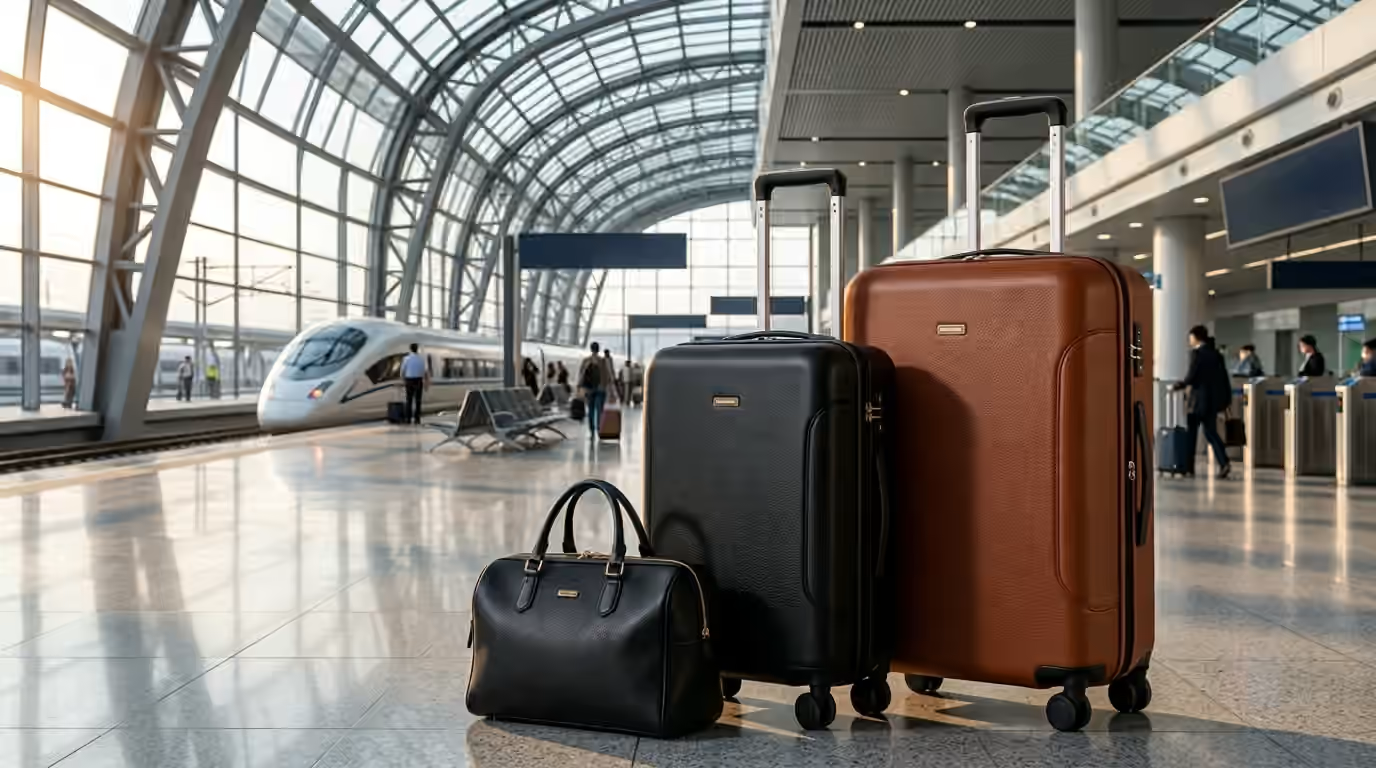
Quick Summary
For luggage and big duffel bags, you need a stiff shape, water resistance, and a low price. PVC leather is the better choice. For tote bags and weekend bags, you want a soft feel and a real-leather look. Choose PU leather.
Many people miss one thing. Travel bags rarely fail because of the surface pattern. They fail because the backing fabric and the coating do not stick together well. The heavier the load, the stronger and stiffer the backing fabric must be. So before mass production, always get a real material sample. Then make a sewn sample bag and check it.
| PVC Leather | PU Leather | |
|---|---|---|
| Feel | ⭐⭐⭐☆☆ | ⭐⭐⭐⭐⭐ |
| Water resistance | ⭐⭐⭐⭐⭐ | ⭐⭐⭐☆☆ |
| Scratch resistance | ⭐⭐⭐⭐⭐ | ⭐⭐⭐⭐⭐ |
| Shape retention | ⭐⭐⭐⭐⭐ | ⭐⭐⭐☆☆ |
| Price | Lower | Medium |
| Best for | Luggage, duffel bags, organizers | Tote bags, fashion handbags |
Why PVC Leather Works Well for Travel Bags ?
PVC leather is a fabric backing covered with a layer of plasticized PVC coating. A travel bag has a hard life. It gets dragged, dropped, and stacked. It may also get rained on. PVC leather can handle all of this.
Water-resistant surface. The coating does not absorb water. Rain and spilled liquids mostly stay on the surface. But do not say the finished bag is "fully waterproof." Needle holes and unsealed seams can still let water in.
Wear resistance. Duffel bags are dragged across airport floors, so they wear out fast. PVC has a dense surface layer. It resists wear better than most soft synthetic leathers. If you want data, ask your supplier for ISO 5470-2 results for dry and wet abrasion. This is the Martindale abrasion test method for coated fabrics.
Good shape retention. PVC is naturally a bit stiff. A big bag will not collapse easily, even when it is half full.
Easy to clean. When it gets dirty, just wipe it with a wet cloth. This is very handy for products that sit on wet floors or in car trunks.
Controlled cost. It looks like leather, and the price is competitive. This makes it a good fit for mid-range and business travel collections.
There are also some downsides:
- It feels hard. If the grain is poorly made, it looks like plastic.
- If the plasticizer is poorly chosen, the material can crack in cold weather.
- Exports have limits on phthalates. Under Entry 51 of Annex XVII of EU REACH, DEHP, DBP, BBP, and DIBP must be below 0.1% in plasticized materials. Ask your supplier early for a compliance report for your target market.
Why PU Leather Can Also Work for Travel Bags ?
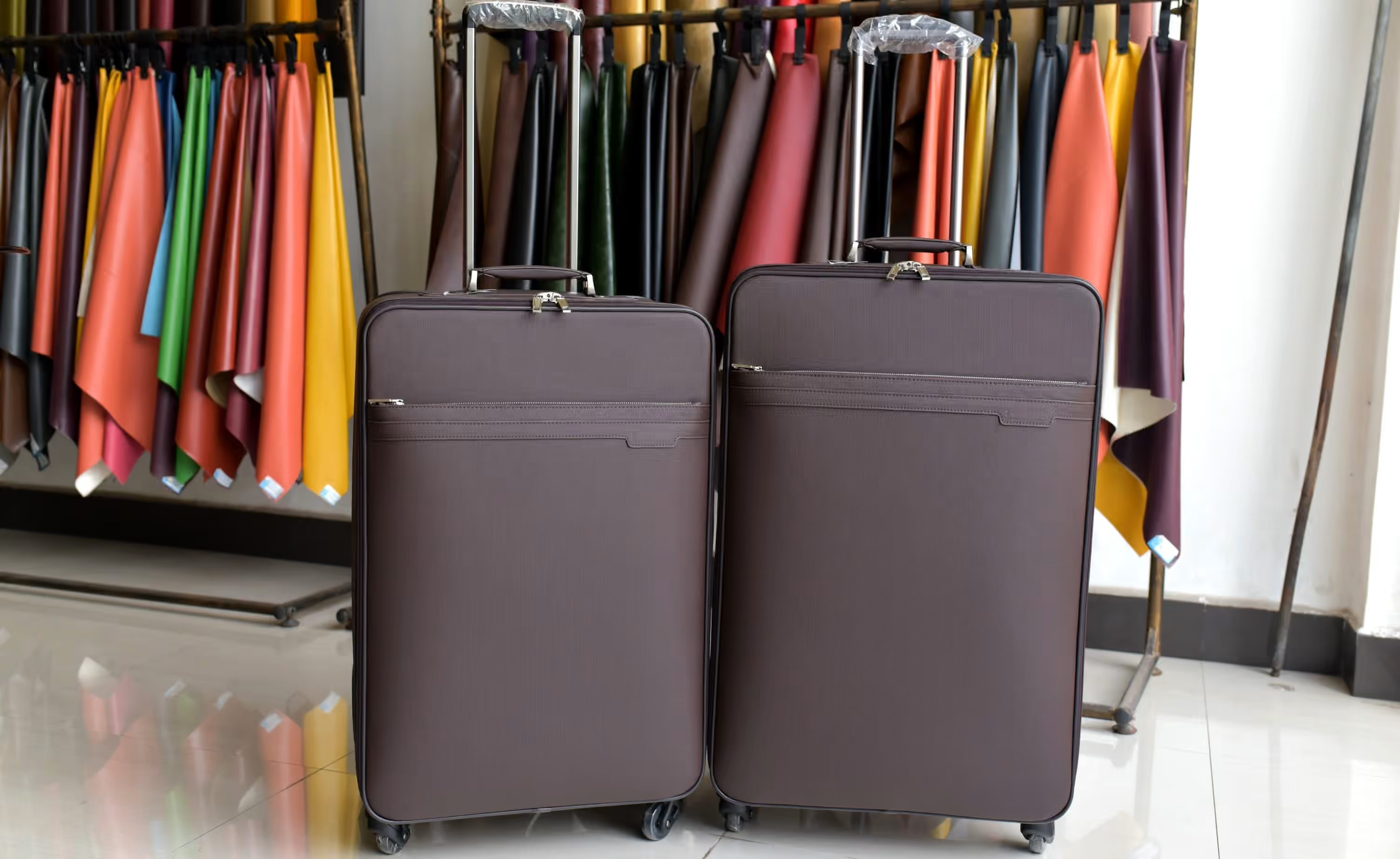
PU leather uses a polyurethane coating. If you care more about how the bag feels in the hand, and not only about durability, PU is a better fit.
Softer and lighter. For tote bags, shoulder bags, and soft weekend bags, comfort and weight matter a lot. PU is better here.
More like real leather. PU can have fine texture, rich colors, and a soft shine. That is why fashion brands use it often.
More flexible. It folds and drapes naturally. It does not get stiff as easily as PVC. It suits thin organizer bags and soft-structure bags.
The biggest risk is hydrolysis. Some PU formulas slowly age in hot and humid places. The surface starts to peel and separate from the backing. The Leather Dictionary puts surface cracking of cheap faux leather in this group of problems. If your bags will be sold in hot and humid regions, ask which type of polyurethane is used. Also ask for a hydrolysis resistance test report (a humid-heat aging test). A cheap PU may look fine when you first get it, but it can fail after one season.
How to Choose the Backing Fabric ?
Not long ago, a buyer wanted to change his leather supplier. He said the factory he used before made poor-quality leather. He visited our factory. He planned to buy PVC leather for suitcases and sell them online. He brought samples from his old supplier, and we tested them. We found that the surface layer was actually acceptable. The problem was the backing fabric. It was very poor, and you could tear it by hand.
The customer sees the surface. But sewing results, bending performance, and load-bearing strength all depend on the backing fabric.
| Backing Fabric | Advantages | Best for |
|---|---|---|
| Knitted fabric | Flexible, easy to sew | Toiletry bags, organizers, small travel items |
| Polyester woven fabric | Stable size, does not stretch under load | Duffel bags, bags for heavy items |
| Mesh fabric | Tear-resistant, light | Large travel bags, heavy-duty luggage |
| Foam-laminated | Cushioning, soft feel | Laptop bags, protective cases, high-end styles |
The rule is simple: the heavier the load, the stronger and stiffer the backing must be. A big duffel bag with a knitted backing is easy to sew. But after half a year of use, it may be pulled out of shape.
How to Choose the Thickness ?
There is no standard answer for thickness. It depends on how much structure the product needs. The table below shows common starting ranges. Adjust them after you make a sample bag.
| Product | PVC | PU |
|---|---|---|
| Duffel / weekend bag | 0.8–1.3 mm | 0.8–1.1 mm |
| Soft luggage | 1.0–1.3 mm | Not common |
| Tote / shoulder bag | 0.8–1.2 mm | 0.6–0.9 mm |
| Toiletry / makeup bag | 0.6–0.8 mm | 0.6–0.8 mm |
| Passport holder / travel wallet | 0.6–0.8 mm | 0.6–0.8 mm |
| Luggage tag | 0.8–1.0 mm | 0.8–1.0 mm |
Thicker is not always better. Very thick material is hard to sew at corners, handles, and zipper ends. It also adds weight, and users can feel it in their hands.
How to Choose the Grain ?
Grain is not only about looks. It also decides how soon scratches show up.
- Litchi grain: The safest choice for travel bags. The lines are irregular, so scratches are less visible.
- Pebbled grain: Similar to litchi grain, but softer and more casual.
- Saffiano grain: Stiff and scratch-resistant. Often used for passport holders, wallets, and business collections.
- Crocodile grain: Very luxurious. Popular in some Middle Eastern markets.
- Smooth grain: Simple and modern. It shows fewer fingerprints than a glossy finish.
If you want your own exclusive grain, most factories can develop an embossing pattern from your sample or drawing. Before mass production, remember to confirm approved samples for color, gloss, and embossing depth.
PVC vs. PU vs. Microfiber Leather
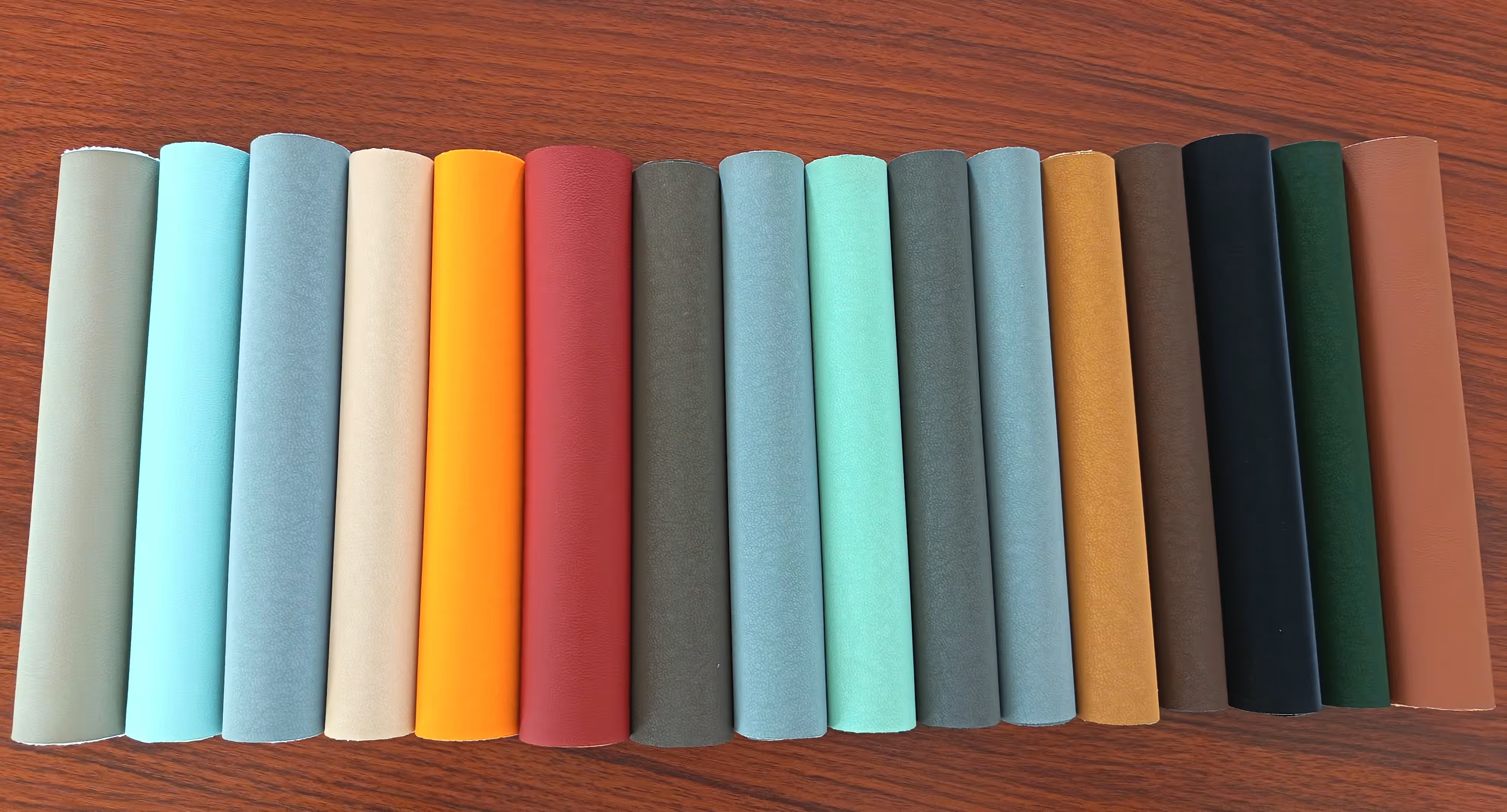
Microfiber leather uses an ultra-fine fiber non-woven fabric as the base, with a PU coating on top. So its feel is the closest to real leather, and its price is the highest.
| PVC | PU | Microfiber Leather | |
|---|---|---|---|
| Cost | Lowest | Medium | Highest |
| Softness | Average | Soft | Very soft |
| Water resistance | Excellent | Good | Good |
| Wear resistance | Excellent | Good | Excellent |
| Shape retention | Excellent | Average to good | Very good |
| Premium look | Good | Very good | Excellent |
| Best for | Luggage, duffel bags | Totes, fashion bags | High-end collections |
In short:
- Tight budget, and the bag must survive rough use: choose PVC.
- Daily commuting, and you want soft and good-looking: choose PU.
- Building a high-end brand, and you want a leather-like feel plus durability: choose microfiber.
Common Mistakes When Choosing Synthetic Leather for Travel Bags
- Looking only at the surface. Two rolls may look the same, but with different backing fabrics they can perform very differently.
- Approving from photos only. Always get a real sample. You cannot see the feel, smell, or stiffness on a screen.
- Skipping the sewn sample bag. Some materials look great when laid flat. But at corners, handles, and zipper edges, they become hard to work with.
- Ignoring hydrolysis in PU. This matters most when the bag will be sold in hot and humid regions.
- Using the same thickness for every product. A luggage tag and a duffel bag need completely different structures.
- Not checking bonding strength and tear strength. ASTM D751 includes test methods for coated fabrics, such as coating adhesion, tear strength, hydrostatic resistance, and low-temperature bend. You do not need every test. But ask your supplier which ones they actually did.
- Leaving compliance to the last minute. Different markets have different chemical rules. If you find a problem after production, the loss can be big.
- Not rechecking color between batches. After you approve the sample, check every batch against it.
Pre-production checklist: thickness tolerance, color difference between batches, embossing accuracy, backing fabric quality, peel strength, wear resistance, water resistance, cold-bend resistance, smell, and logo process fit (hot stamping, embossing, or printing).
Final Words
For most travel bags, PVC is the practical choice, and PU is the comfortable choice. First think about how the bag will really be used, then choose the material. Also, do not focus only on looks. Take the backing fabric, thickness, and testing seriously too. Tell us your bag type, target market, and price range. We can suggest a suitable material structure, and we can also send you samples.
Hualixing New Materials Co., Ltd. manufactures affordable PVC Leather, Water-based Eco-friendly PVC Leather, and Solvent-free PU Leather for buyers worldwide, with both our water-based PVC leather and solvent-free PU leather having passed environmental testing by SGS, a third-party testing organization; to learn more, please contact us.
FAQ
Q: Is PVC leather waterproof?
The material itself is waterproof. But once it is made into a bag, it is only splash-resistant, unless the seams are sealed or taped.
Q: Is PU leather good for travel bags?
Yes, especially for soft bags, tote bags, and products for lighter use. For luggage that is often dragged or carries heavy items, PVC is usually more durable.
Q: Which is more durable, PVC or PU?
At the same quality level, PVC usually has better wear resistance and moisture resistance. Good PU can also perform well. But its life depends a lot on the polyurethane formula and the environment.
Q: Will PU leather peel?
Yes. Peeling is usually caused by hydrolysis, or by a weak bond between the coating and the backing fabric. Choose high-grade PU and run a hydrolysis test. This lowers the risk a lot.
Q: Is PVC leather safe for export?
Yes, as long as it meets the rules of the target market. For the EU, it must meet the REACH limits on phthalates. Remember to ask your supplier for test reports for that market.
Q: How thick should the material be for a duffel bag?
PVC is usually between 0.8 and 1.3 mm. If the bag will carry heavy items, we suggest a polyester woven or mesh backing.
Q: Can I customize the color and grain?
Usually yes. Most factories can match your sample for color, gloss, and grain. The minimum order quantity depends on the pattern.
Get a Free Quote
Hualixing New Materials Co., Ltd. is a factory-direct synthetic leather manufacturer with 30 years of manufacturing experience, specializing in OEM/ODM services. We manufacture and supply PVC leather, PU leather, silicone leather & vegan leather for automotive, furniture, upholstery, marine and more. Custom orders are available by yard or meter. Tell us your needs, and we will respond within 24 hours.