PVC Leather for Truck and Bus Seats: How to Choose the Right Material
Table of Contents
The Short Answer
If you don't have time to read the whole article, remember these points:
- A truck seat is used by one driver for a whole day. Focus on wear resistance, flex resistance, sweat and oil resistance, and comfort in long hours.
- A city bus seat is used by many people. Focus on cleaner resistance, easy wiping, flame resistance, and scratch resistance.
- A coach seat is used for long trips. Focus on soft feel, wear resistance, air flow and heat release, low smell, and a good look over time.
- Thicker is not always better. Look at the surface layer, foam, backing fabric, seat design, and making process together.
- One flame test report does not work for every case. Each market, vehicle type, and seat position has its own rules.
Three Types of Seats, Three Ways to Choose
| Use case | Main conditions | What to look for in PVC leather |
|---|---|---|
| Truck driver seat | One person sits for a long time, gets in and out often, sweat, work clothes, oil | Wear resistance, flex resistance, sweat and oil resistance, comfort in long hours |
| City bus | Many passengers, people get on and off often, cleaned every day | Wear resistance, stain resistance, cleaner resistance, flame resistance, easy to clean |
| Coach | Long trips, high need for comfort and good looks | Soft feel, wear resistance, air flow and heat release, low smell, stable look |
Don't use one standard for all three. A leather that works well on a truck may not work on a bus.
Truck Seats: One Person, Sitting All Day
A driver gets in and out of the truck many times a day. Wear usually happens in the same places: the front edge of the seat cushion, the side bolsters, and the lower back area. On top of that, there is sweat, skin oil, and dirt from work clothes. The weather also changes from hot to cold. The surface and coating must be strong enough for all of this.
When you choose leather for truck seats, check these points:
- After many flexes, does the surface turn white or crack?
- After you wipe off sweat or oil, does the surface get sticky or change color?
- In cold weather, does the leather become hard and brittle?
- Are the side bolsters and seams made stronger?
Here is something we often see when we make samples. The leather looks fine when it lies flat on a table. But after it is fitted, stretched, and sewn on a real seat, the problems show up. So test your sample on a real seat structure. Don't trust a small piece only.
City Buses: Cleaning Is a Daily Job
Bus seats need to be wiped almost every day. The US CDC guide for public transport cleaning says that seats, as a high-touch, non-porous surface, should be cleaned and disinfected every day. It also says you must follow the product label for strength, method, and contact time.
This leads to a key point for buyers: "easy to clean" must be specific, not just a phrase. Say which disinfectant you use, how strong it is, and how many times you wipe. A vehicle maker's own disinfection notice warns that a strong bleach mix may damage interior surfaces. So please test cleaner resistance with your real cleaning routine. Don't use generic test conditions that don't fit your case.
Coaches: Comfort and Looks Both Matter
Passengers may sit for hours. Soft feel, heat release, and smell all change how they feel. PVC leather has clear strengths: it is easy to care for, it looks the same from roll to roll, and the cost is easy to control. If your coach is made for comfort, check air flow and heat release with care. For example, look at whether the surface has holes, and how the foam and backing fabric work together.
Note that holes do not always mean more comfort. If the hole size, hole spacing, foam, and backing don't work together, the seat only looks breathable. We suggest you test a finished seat before you decide.
How Thick Should It Be? Don't Look at the Number Alone
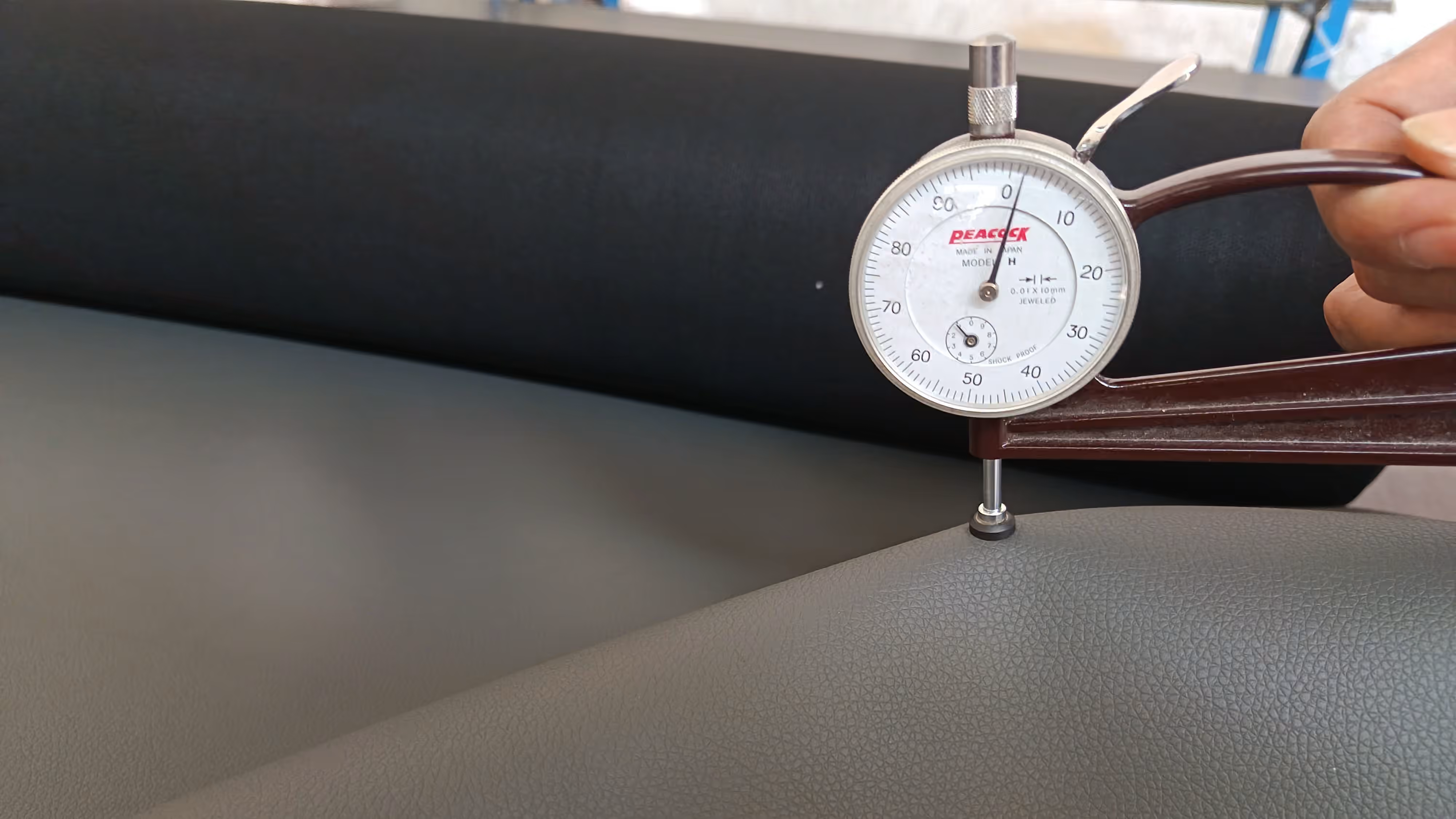
People often ask, "How thick is enough?" A better question is: how does this whole structure perform on this seat?
Feel and life depend on these parts working together:
- Thickness and formula of the PVC surface layer
- Foam layer (is there one, how thick, what density)
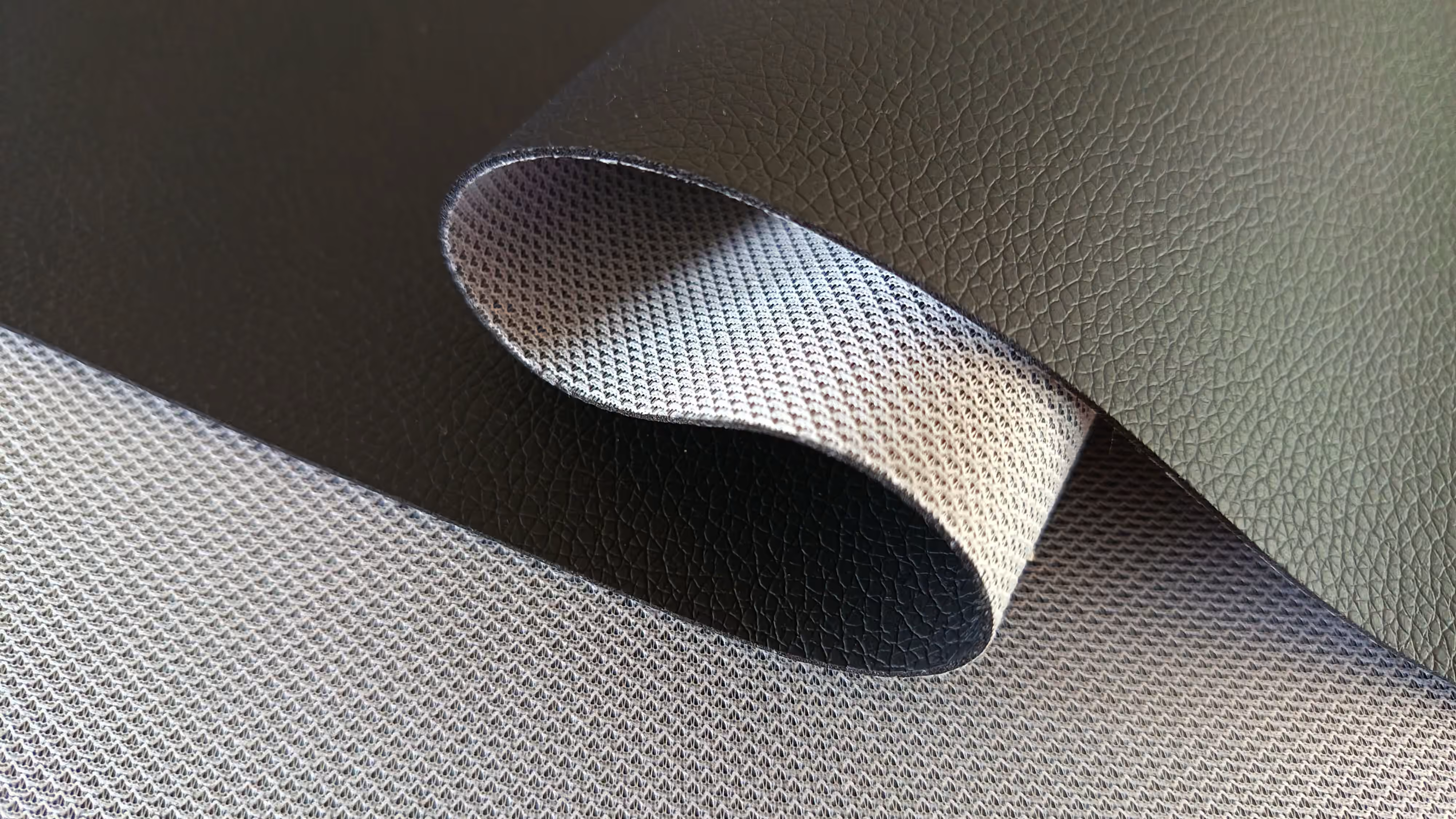
- Type of backing fabric (knitted, woven, or other)
- Seat shape and covering method (sewing, wrapping, bonding)
Two leathers can have the same total thickness. But if the backing and foam are different, the flex result, seam strength, and feel will also be different. So when you buy, don't write only "1.0 mm" or "1.2 mm". Give the structure and the test method too.
How to Test Wear Resistance
Wear resistance depends on where the wear happens and how it happens. On a truck, wear is in the front edge and side bolsters. On a bus, the whole seat surface and the sides are rubbed again and again.
For coated fabrics, a common test is ISO 5470-2 (Martindale method). It can run dry and wet tests on the coated side. Please note that it does not apply to the uncoated side of a coated fabric.
Also, don't turn the number of test cycles into "how many years it will last". There is no fixed link between lab cycles and real life in a fleet.
Flame Standards: One Report Does Not Work for Every Case
This is where buyers make mistakes most often. Here are the common standards:
| Standard | Region | Key points |
|---|---|---|
| FMVSS 302 | USA | Applies to passenger cars, trucks, and buses. Burn rate limit is 102 mm/min |
| GB 8410 | China | Horizontal burning test for car interior materials. Pass limit is 100 mm/min |
| ISO 3795 | International | Test method for horizontal burn rate. Applies to thickness up to 13 mm |
| UNECE R118 | Europe / UN system | Covers parts such as seats. Test items depend on where the part is installed |
Please note:
- FMVSS 302 clearly lists seat cushions and seat backs as parts that must meet the rule. See the NHTSA interpretation letter.
- R118 mainly covers M3 Class II and III coaches. It does not cover common city buses (Class I). Please check your vehicle class and the current version. Its tests include horizontal burning, melting behavior, and vertical burning, depending on the install position.
- You can find GB 8410 on the National Standards Full-text Public System (China).
- The report must match the real material structure. A test on bare PVC film does not stand for a finished seat with foam, backing, and glue.
Environment and Smell: Ask About Them Separately
Smell, VOC, fogging, and harmful substances are different things. Ask for a separate document for each:
- VOC: A common method is ISO 12219-4 (small chamber method). But each vehicle maker has its own limits. Follow the customer's standard.
- Harmful substances: The EU End-of-Life Vehicles (ELV) Directive limits lead, mercury, cadmium, and hexavalent chromium in vehicle materials (with some exemptions).
- SVHC: If an item contains a REACH Candidate List substance above 0.1% by weight, the supplier must pass safe-use information down the supply chain.
So "eco-friendly" or "REACH passed" is not enough. Ask for the real test report, the method, and the scope.
What to Test for Each Seat Type
For bus seat leather, we suggest this order: Wear → Flex → Tear strength → Colorfastness → Cleaner resistance → Repeated cleaning test → Flame resistance → Aging
For truck seat leather, we suggest this order: Wear → Flex (including low temperature) → Sweat and oil resistance → Stain resistance → Seam strength → UV and heat aging → Flame resistance
How to Write a Purchase Spec
Write these items in your request for quotation (RFQ) to suppliers:
- Color, grain, and surface finish (matte or glossy)
- Total thickness and test method
- Weight and width
- Structure (surface layer, foam, backing fabric type)
- Wear resistance requirements (method, number of cycles, pass standard)
- Tear strength and flex resistance requirements
- Cleaner and disinfectant resistance requirements (state the type and strength)
- Flame standard and target market
- Smell, VOC, and harmful substance requirements
- Packing method, batch traceability, and minimum order quantity (MOQ)
The more detail you write, the less back-and-forth argument you will have later. It also helps you spot samples that "look the same but are not."
Final Note
Hualixing New Materials Co., Ltd. Manufactures both affordable PVC Leather and Water-based Eco-friendly PVC Leather. Our water-based PVC leather has passed environmental testing by SGS, a third-party testing organization. If you want to learn more,please contact us.
FAQ
Why is PVC leather often used for commercial vehicle seats?
It is easy to wipe, resists stains, looks the same from batch to batch, and the cost is easy to control. But whether it fits still depends on the seat structure, the cleaning method, and the comfort you need.
For truck seats, is PVC leather better than fabric?
It depends on the use. If the seat gets oil and dirt often and needs quick cleaning, PVC leather is easier. If long-hour air flow matters more, a high-performance fabric may be a better choice.
Is an FMVSS 302 report enough?
No. It only shows burning behavior. It does not prove wear resistance, smell, VOC, or durability. It also cannot replace the rules of other markets.
How many years can PVC leather last?
There is no single answer. You need to look at the vehicle type, climate, cleaning method, and the real repair records of your fleet.
Get a Free Quote
Hualixing New Materials Co., Ltd. is a factory-direct synthetic leather manufacturer with 30 years of manufacturing experience, specializing in OEM/ODM services. We manufacture and supply PVC leather, PU leather, silicone leather & vegan leather for automotive, furniture, upholstery, marine and more. Custom orders are available by yard or meter. Tell us your needs, and we will respond within 24 hours.