Marine Vinyl Leather: How to Choose Leather for Boat Seats
Table of Contents
Quick Summary
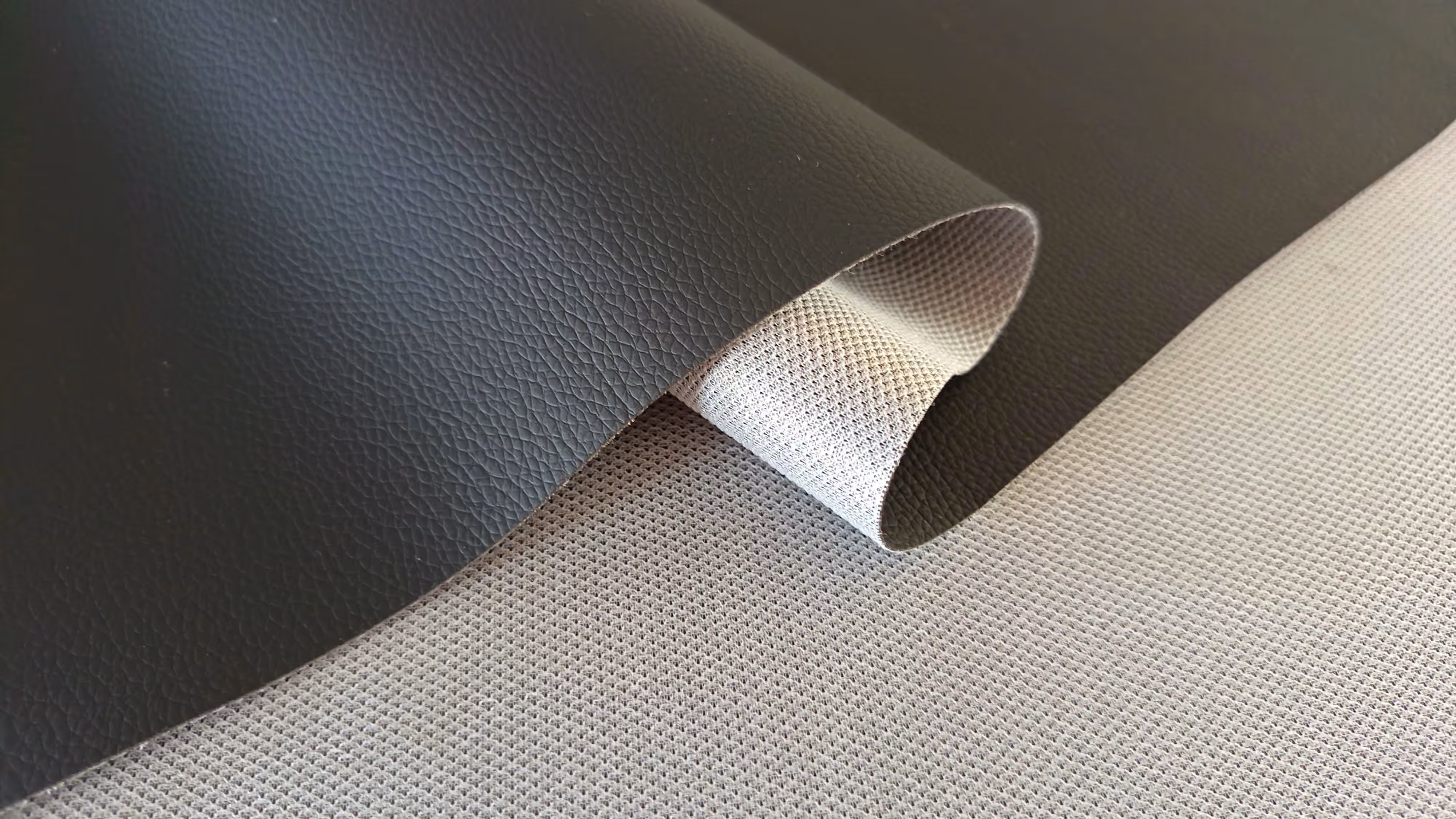
When you choose Marine Vinyl Leather (PVC-based vinyl leather) for boat seats, check three things at the same time: UV and mold protection, a strong backing fabric, and complete test reports. Choose color and texture by where the seat is used. For seats in strong sun, pick a mid-tone color and a texture that is easy to wipe clean. For seats in closed cabins, light colors are fine, but you need to clean them often. Do not trust the words "marine grade" alone. Ask the supplier for test methods and reports.
Why Do Boat Seats Usually Use Vinyl Instead of PU?
Life is hard for boat seats. They get rain, water, strong sun, salt spray, big temperature changes and mold. They are washed again and again, and passengers touch them all the time.
PU leather feels soft. It works well indoors and in cars. But in hot and wet places, PU breaks down easily and ages fast. Strong sun at sea also speeds up oxidation on the PU surface, and then the top coat peels off. On a boat, PU will peel and turn sticky much sooner than you expect.
We have seen this ourselves. A large customer in Indonesia makes seat covers for boat interiors. He liked our solvent-free PU leather and wanted to use it on boats. We did not take the order. We told him to use vinyl instead. PU is not bad. It is just not made for this kind of place. Vinyl has been used on boats for decades and works well, which is why shipyards choose it.
What Makes Vinyl "Marine Grade"?
"Marine grade" has no official standard. These two words alone tell you nothing. Real marine vinyl should come with data like this:
- UV resistance: This is usually shown as hours of accelerated aging. A common test method is ASTM G154. Note that this test copies sunlight and moisture, but not salt water. So it cannot fully show real conditions at sea.
- Mold resistance: ASTM G21 is a common mold test for plastics. ASTM also points out that polymers themselves are usually not food for mold. The problem usually comes from other added materials and dirt on the surface. So keeping seats clean and dry is as important as mold treatment.
- Cold resistance (cold crack temperature): This matters if seats are kept in cold storage in winter, or if the boat goes to cold regions.
- Abrasion resistance: Ask which method the supplier used. ISO 5470-2 is the Martindale abrasion test for plastic-coated fabrics. Its cycle numbers cannot be compared directly with Wyzenbeek "double rubs".
- Flame resistance: BS 5852 is a common standard. It tests the fabric and the filling together, not the leather alone.
How to Choose the Color of Vinyl Leather
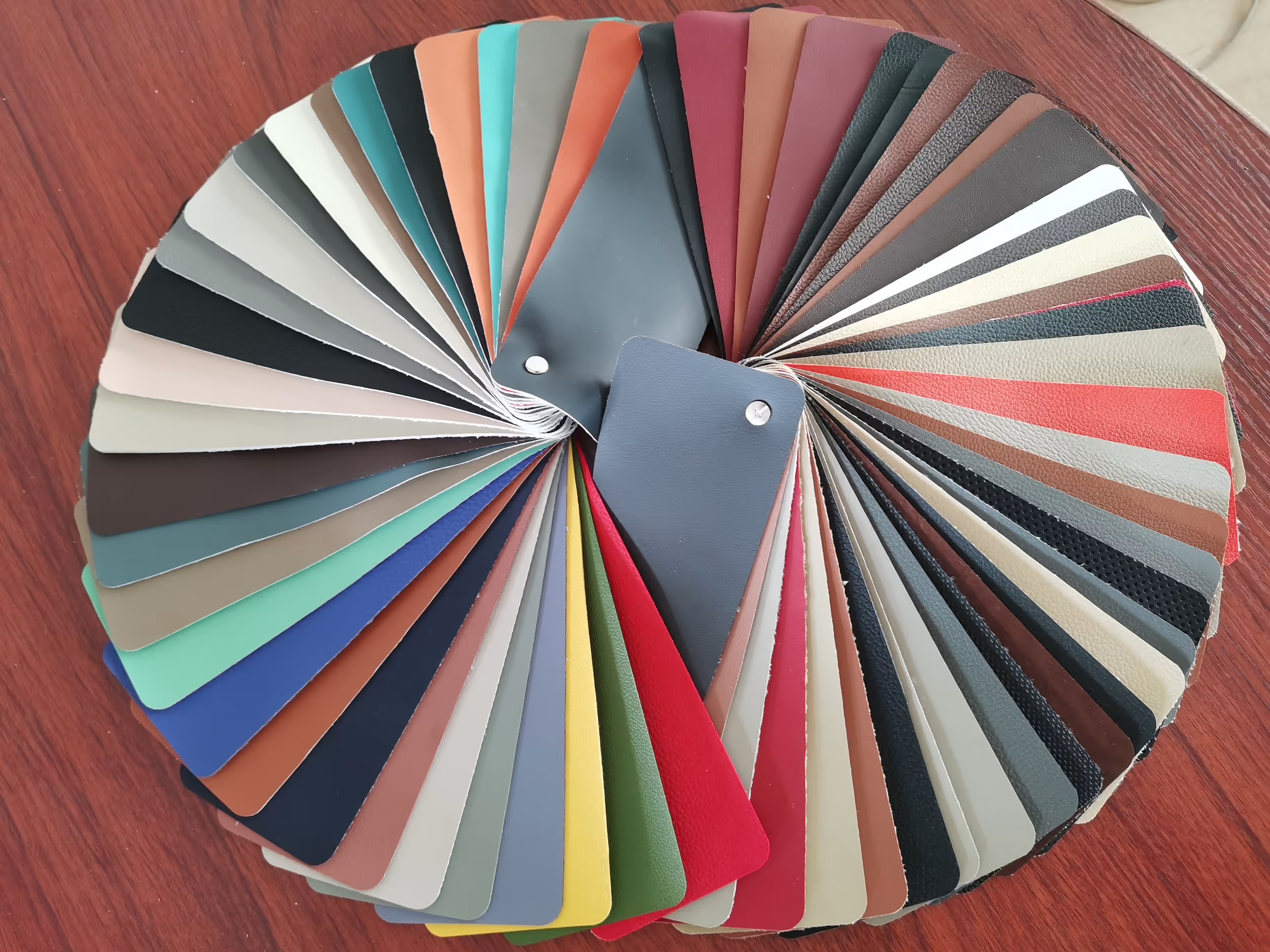
If your customer has already chosen a color, just follow it. If not, choose by how the seat will be used.
Dark colors hide stains and look solid. But they get very hot under direct sun. Light colors look high-end and stay cooler, but they get dirty more easily, especially in closed cabins with poor air flow. Light colors can also pick up dye from jeans and life jackets. White vinyl may also get pink stains caused by bacteria. If you choose white or beige, ask if the vinyl has anti-pinking treatment.
A simple guide: for deck seats in strong sun, choose mid-tone colors such as gray, sand or navy. For seats inside the cabin, light colors are fine if someone wipes them regularly.
How to Choose the Texture of Vinyl Leather
Fine, smooth textures look high-end. But scratches and changes in gloss show up more easily. Rougher textures hide dirt and marks better. But if the texture is too deep, salt and dirt get stuck in the grooves.
A good texture looks nice and is easy to clean with a wet cloth. Before you confirm the sample, ask for a large piece. Test it yourself with sunscreen, coffee and oil, and see how easy it is to clean.
How to Choose the Backing Fabric of Vinyl Leather
The backing fabric decides how the leather performs after it is wrapped over foam and sewn. Most marine vinyl uses polyester backing.
- Knitted backing: It has a little stretch. It wraps curves and corners without wrinkles.
- Woven backing: It is more stable. It lasts longer on flat seat cushions and on seams under heavy load.
- Either type: Ask if the backing fabric itself has mold treatment. If the backing gets wet and cannot dry, mold will grow. You cannot see this from the front.
Also check how well the surface coating bonds to the backing. If the surface separates from the backing after a few seasons, the problem is the backing and the lamination process, not the surface finish.
How to Write an RFQ Checklist for Marine Leather
When you send an RFQ, list the items in a table like this. It makes it easy to compare different suppliers:
| What to ask | Why it matters |
|---|---|
| Roll width and roll length | Affects cutting waste and shipping plans |
| Thickness and weight | Two "marine leathers" can be very different |
| Color, texture and backing type | Must match the approved sample exactly |
| UV hours and test method | "500 hours" means nothing without the method |
| Mold and antibacterial reports | Ask for the standard number and the report |
| Cold crack temperature | Choose it by where the boat will be used |
| Abrasion result, test method and end point | Results from different methods cannot be compared directly |
| Flame standard and version | Confirm it fits your seat structure |
| Warranty coverage | Does it cover fading, peeling and cracking? |
| MOQ, packing and delivery terms | Needed before you compare prices |
There is a common trap when you compare prices: compare the price per square meter, not the price per meter. If the roll is narrow, the price per meter looks cheap, but the price per square meter may be higher. Also, a very low quote may be for ordinary indoor PVC, not marine leather that can be used outdoors.
Final Words
Choose the right material first. Then think about looks. Vinyl is trusted on boats because it resists sun, water and daily use. Whether it lasts many years or breaks after two or three seasons depends on details: the backing, the texture, the color and the test reports.
After you buy, regular cleaning and drying are just as important. Warm water with mild dish soap works well. You can read the Southern Boating care guide.
Hualixing New Materials Co., Ltd. manufactures affordable PVC Leather, Water-based Eco-friendly PVC Leather, and our own Negative Ion Vegan Leather. Our water-based PVC leather has passed environmental testing by SGS, a third-party testing organization. Our Negative Ion Vegan Leather is developed in-house and offers a functional option for customers looking for new types of synthetic leather. If you want to learn more, please contact us.
FAQ
Is Marine Vinyl Leather the same as real leather?
No. In this industry, "marine leather" usually means PVC-coated artificial leather, not animal skin. Real leather is rarely used on open boat seats.
Can I use car or furniture vinyl on a boat?
Not for open-air seats. Indoor vinyl usually has no UV or mold protection for outdoor use. It can crack, fade and get stained.
How long does marine vinyl last?
It depends on quality, how much sun it gets, how it is stored and how it is cleaned. A boat that is cleaned, dried and covered often will last much longer than a boat that stays wet in the sun.
How many UV hours should I choose?
Ask for both the hours and the test method. Many suppliers treat about 500 hours as entry level. Better products go higher. But you can only compare the numbers if the test method is the same.
Why does white vinyl turn pink or get stains?
It is usually caused by bacteria or mold. Wet storage and sunscreen leftovers make it worse. Clean stains early and dry the seat fully. If you buy light colors, ask if there is anti-pinking treatment.
How do I clean marine vinyl seats?
First wash with warm water and mild dish soap. Then rinse with clean water and wipe dry. Do not use abrasive cleaners. They damage the surface coating.
Get a Free Quote
Hualixing New Materials Co., Ltd. is a factory-direct synthetic leather manufacturer with 30 years of manufacturing experience, specializing in OEM/ODM services. We manufacture and supply PVC leather, PU leather, silicone leather & vegan leather for automotive, furniture, upholstery, marine and more. Custom orders are available by yard or meter. Tell us your needs, and we will respond within 24 hours.